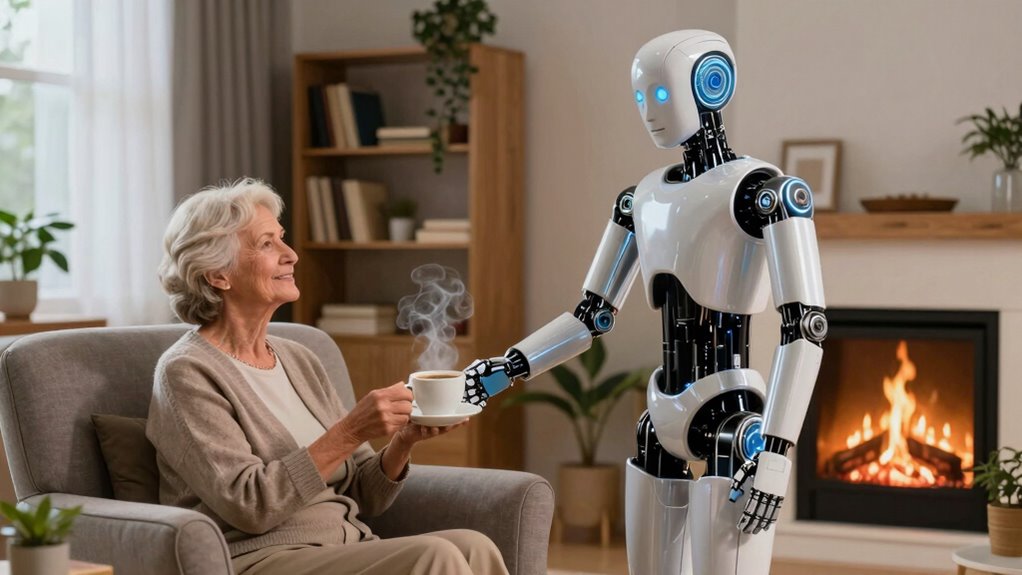
Personal robots are moving from labs into your home, becoming helpful assistants that adapt to your routines. With advances in AI, these machines can help with chores, provide companionship, and support your health needs. As they learn your preferences, they’ll become more intuitive and personalized. Privacy and security concerns are important, but companies are developing protections that build trust. If you keep exploring, you’ll discover how these smart helpers will soon become part of everyday life.

Prime made for students and young adults
- Fast, free delivery for dorm and study essentials
- Prime Video and Amazon Music included
- Member-only deals
Key Takeaways
- Advancements in AI enable robots to perform daily tasks, making them practical for home use.
- Improved affordability and miniaturization facilitate integration into household environments.
- Increased focus on privacy and security protocols build trust for widespread adoption.
- Regulatory frameworks and ethical standards guide responsible development and deployment of home robots.
- Consumer demand for convenience and assistance accelerates transition from prototypes to household products.
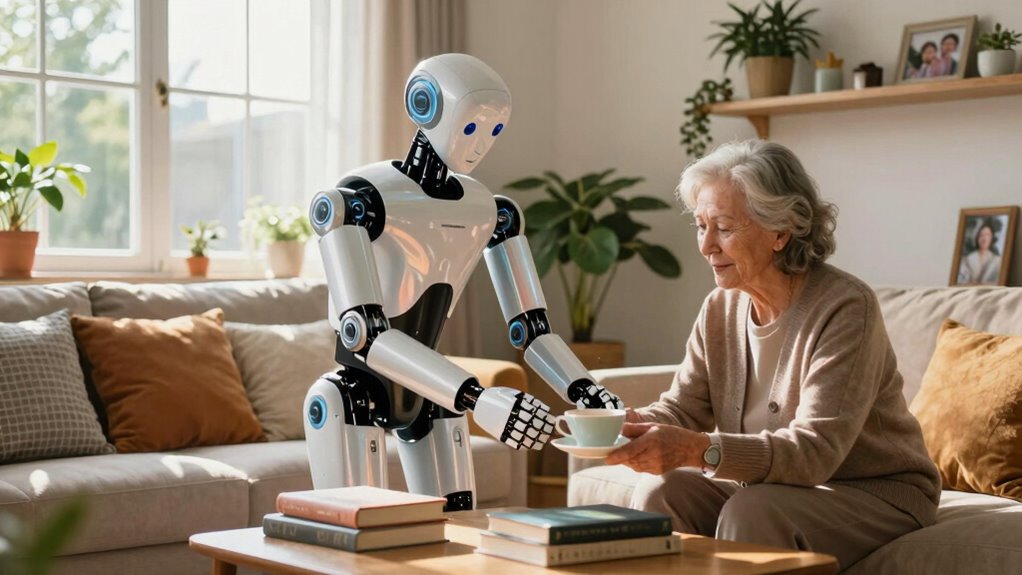
Have you ever wondered how robots are transforming everyday life at home? The rapid advancement of personal robotics is bringing intelligent machines out of labs and into our living spaces. These robots are designed to assist with chores, provide companionship, and even support health needs. The key to this metamorphosis lies in AI integration, which allows these devices to learn from their environment, adapt to your routines, and respond intelligently to your commands. With AI, robots become more than simple tools—they evolve into personalized assistants capable of understanding your preferences, scheduling, and habits. Imagine a robot that can prepare your coffee in the morning, remind you of appointments, or help care for children and elderly family members. This level of integration makes daily life more convenient, freeing up your time for more meaningful activities.
However, bringing robots into the home isn’t without challenges. One major concern is privacy. These devices are constantly collecting data—what you do, where you go, and even conversations you have nearby. While this data helps improve the robot’s functionality, it also raises questions about security and surveillance. You might worry about who has access to this information and how securely it’s stored. The idea of a robot listening in on your private moments can feel intrusive, especially if data breaches or unauthorized access occur. Manufacturers need to prioritize robust security protocols and transparent data policies to build trust with users. Only then can you feel comfortable with the idea of AI-powered robots operating in your personal space. Additionally, privacy considerations are essential when integrating these devices into everyday life. Ensuring security protocols are in place can help protect sensitive information and maintain user confidence. Recognizing the importance of data security is crucial for fostering user trust and widespread adoption. Furthermore, understanding the ethical implications of AI in personal robotics is vital to ensure these technologies are developed responsibly and respectfully of user rights. Moreover, ongoing regulation and oversight can help address emerging risks and set standards for safe deployment.
Despite these concerns, the potential benefits are significant. Personal robots can assist with routine tasks, reduce the workload, and support independence for the elderly or disabled. They can monitor your home for safety, alerting you or emergency services if something’s wrong. As AI integration becomes more seamless, these robots will become increasingly intuitive, learning your preferences and adjusting their behavior accordingly. The key to successful integration lies in balancing technological capabilities with privacy protections. When done correctly, personal robotics could revolutionize how you live, making your home smarter, safer, and more personalized. The evolution from lab prototypes to everyday household helpers is already underway, promising a future where your robot companion is as familiar as your favorite chair—serving, assisting, and adapting to your needs.
As an affiliate, we earn on qualifying purchases.
Frequently Asked Questions
How Affordable Will Personal Robotics Be for Average Families?
Personal robotics will become more affordable for average families as cost reduction techniques improve and market growth accelerates. As manufacturers scale up production, prices drop, making these robots accessible to more households. You’ll find that entry-level models are already reasonably priced, and with continued innovation, advanced features will become affordable too. Market growth fuels competition, further driving down costs, so personal robotics will soon be within reach for many families.
What Safety Features Will Personal Robots Include?
Personal robots will include robust safety features like advanced robot safety mechanisms to prevent accidents and injuries. You’ll find intuitive user interfaces that allow you to easily control and monitor your robot’s actions, ensuring safe interaction. These features will also include emergency stop buttons and sensors that detect obstacles or humans nearby, making sure your robot operates securely in your home environment while giving you peace of mind.
How Will Robots Adapt to Different Home Environments?
You’ll see robots adapting to your home through advanced robot adaptability and environment customization. They’ll learn your routines, recognize objects, and adjust their functions accordingly. With sensors and AI, they’ll navigate obstacles and tailor their interactions to your preferences. This customization guarantees they seamlessly integrate into your daily life, making tasks easier and more efficient. Over time, they’ll become more intuitive, providing a truly personalized robotic experience in your home.
Will Personal Robots Require Frequent Maintenance or Updates?
Think of your personal robot as a garden that needs regular tending. It will require occasional robot maintenance and software updates to stay in top shape. While some updates might be automatic, others could need your attention, especially if the robot encounters new tasks or issues. Staying on top of these updates guarantees your robot functions smoothly, helping it adapt to your home environment and make your life easier.
How Will Privacy Be Protected With Home Robots?
You’ll want to guarantee your home robots protect your privacy through robust data encryption, which secures your personal information from unauthorized access. Additionally, the robots should operate with your informed user consent, meaning you control what data is shared and stored. Regular updates and transparent privacy policies will help maintain trust, so you can enjoy the benefits of personal robotics without compromising your privacy.
As an affiliate, we earn on qualifying purchases.
Conclusion
So, soon you’ll have a robot at your beck and call—ready to tidy, remind, and even judge you silently. Just imagine, your personal robot might be the only one left who truly understands your Netflix binge habits or judges your messy kitchen in silence. But don’t worry, at least now you’ll have someone—or something—to blame for losing your keys. Welcome to the future, where your home’s new best friend might just be your robotic overlord in disguise.
As an affiliate, we earn on qualifying purchases.
As an affiliate, we earn on qualifying purchases.
Halloween Picks
halloween
As an affiliate, we earn on qualifying purchases.