Human-robot collaboration is evolving quickly as robots now work alongside humans in industries like healthcare and manufacturing, boosting productivity and safety. Advances in AI and sensor technology allow robots to adapt, learn from human behaviors, and perform complex tasks efficiently. Ethical standards and safety protocols are improving trust and managing risks. As these systems become smarter, more flexible, and safer, you’ll discover how this dynamic transformation continues to shape the future of work.

Prime made for students and young adults
- Fast, free delivery for dorm and study essentials
- Prime Video and Amazon Music included
- Member-only deals
Key Takeaways
- Robots now collaborate directly with humans, enhancing productivity across industries like healthcare and manufacturing.
- Advances in AI enable robots to learn from and adapt to human behaviors in real-time.
- Improved safety protocols and calibration ensure reliable, trust-building human-robot interactions.
- Ethical standards guide responsible robot programming, balancing automation with human values.
- Continuous technological innovations accelerate the integration and sophistication of human-robot teamwork.
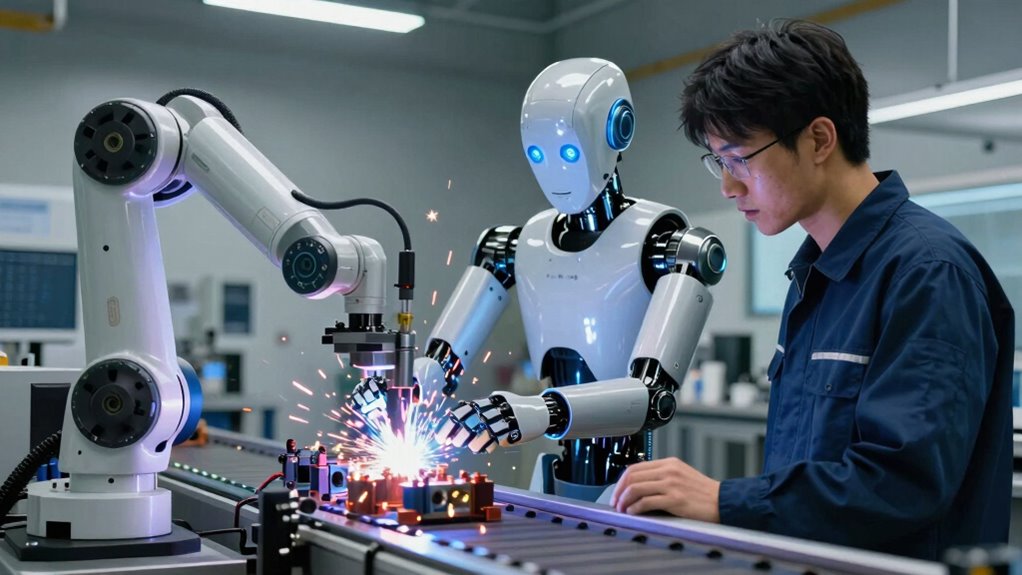
As technology advances at a rapid pace, human-robot collaboration is transforming industries faster than ever before. You’re witnessing a shift where robots don’t just perform repetitive tasks but work side by side with humans, enhancing productivity and efficiency. As this collaboration deepens, issues surrounding robot ethics become increasingly important. You need to consider how robots are programmed to make decisions—are they aligned with human values? Do they respect employee safety and privacy? These questions are guiding developers and companies to implement ethical standards that ensure robots serve humans responsibly, rather than replacing human judgment or causing unintended harm. The conversation about robot ethics isn’t just theoretical; it it influences real-world applications, from healthcare to manufacturing, where robots assist in sensitive environments.
Alongside ethical considerations, calibration becomes a critical factor in ensuring robot accuracy and performance. You must prioritize creating safe working environments where humans and robots coexist seamlessly. This means designing robots equipped with advanced sensors, emergency stop mechanisms, and fail-safe protocols to prevent accidents. Automation safety isn’t just about preventing injuries; it’s about building trust between humans and machines. When you know a robot can detect your presence and stop instantly if necessary, you feel more confident collaborating closely with it. As robots become more autonomous, safety protocols must keep pace, ensuring that their actions are predictable and controllable. This ongoing focus on safety helps reduce risks, making it easier for industries to adopt robotic solutions without compromising worker well-being. Additionally, ongoing training and updates are essential to keep these systems functioning reliably as their capabilities evolve.
Moreover, the evolution of human-robot collaboration isn’t just about safety and ethics; it’s also about adaptability and learning. Robots are now capable of learning from human behaviors, adjusting their actions accordingly. You’re likely to see smarter robots that can interpret human cues, work collaboratively on complex tasks, and even improve their performance over time. This progress requires a delicate balance—robots must be intelligent enough to assist effectively while still adhering to ethical guidelines and safety protocols. As you integrate these advanced systems into your workplace, you’ll find that clear policies, ongoing training, and a focus on transparency are essential to foster trust and cooperation. Incorporating standardized safety protocols helps ensure consistent safety measures across different environments and industries.
In essence, the rapid evolution of human-robot collaboration is reshaping how industries operate. You’re part of a future where robots and humans work together more seamlessly, but this progress relies heavily on addressing crucial issues like robot ethics and automation safety. By ensuring these elements are at the forefront, you can help create a collaborative environment that is not only productive but also ethical and safe for everyone involved.
As an affiliate, we earn on qualifying purchases.
Frequently Asked Questions
What Industries Are Most Impacted by Human-Robot Collaboration?
You’ll find the manufacturing and healthcare industries most impacted by human-robot collaboration. In manufacturing, collaborative automation enhances efficiency and safety, while in healthcare, robots assist with surgeries and patient care. As robot ethics become a focus, you’ll see growing discussions about responsible use and safety standards. This evolution promotes seamless teamwork between humans and robots, transforming workflows and increasing productivity across these sectors.
How Do Robots Adapt to Human Workers’ Behaviors?
Robots adapt to your behaviors like a chameleon changing its colors, thanks to advanced robot learning and behavioral adaptation. They observe your actions, analyze patterns, and adjust their responses in real-time. Machine learning algorithms enable robots to recognize subtle cues and refine their tasks accordingly. As you work alongside them, they become more intuitive and efficient, seamlessly integrating into your workflow and improving collaboration over time.
What Safety Measures Are in Place During Collaboration?
During collaboration, safety measures include sensor integration that detects human presence and movement, allowing robots to respond instantly and avoid accidents. Emergency protocols are in place to shut down or pause robots if unsafe conditions arise. You’ll find these systems work seamlessly, ensuring that interactions are safe and efficient. Regular safety drills and training further reinforce these measures, making sure everyone stays protected while working alongside robots.
How Cost-Effective Is Implementing Collaborative Robots?
Investing in collaborative robots is like planting seeds for future growth—initial costs might seem steep, but the long-term benefits bloom with efficiency and flexibility. You’ll find that a thorough cost analysis reveals savings on labor and increased productivity. Smart investment strategies turn these machines into reliable partners, making automation not just affordable but a strategic move that pays dividends as your operations evolve.
What Skills Do Workers Need in Future Collaborative Environments?
You’ll need strong worker adaptability and ongoing skill development to thrive in future collaborative environments. Embrace learning new digital tools, programming basics, and understanding robot operations. Flexibility is key, as roles may shift, and new tasks emerge. Developing problem-solving skills and emotional intelligence helps you work seamlessly alongside robots, ensuring safety and efficiency. Staying proactive in your skill development will keep you valuable and prepared for the evolving landscape of human-robot collaboration.
industrial safety sensors for robots
As an affiliate, we earn on qualifying purchases.
As an affiliate, we earn on qualifying purchases.
Conclusion
You’re on the brink of witnessing a revolution so groundbreaking, it’ll make history books look outdated overnight. Human-robot collaboration is evolving so rapidly, you’ll swear they’re reading each other’s minds and sharing a single brain. Imagine a future where your robot coworker anticipates your every move, making productivity skyrocket and challenges vanish into thin air. This isn’t just progress; it’s a leap into a future so astonishing, it’ll redefine everything you thought was possible.
As an affiliate, we earn on qualifying purchases.
As an affiliate, we earn on qualifying purchases.
Fall Picks
fall essentials
As an affiliate, we earn on qualifying purchases.