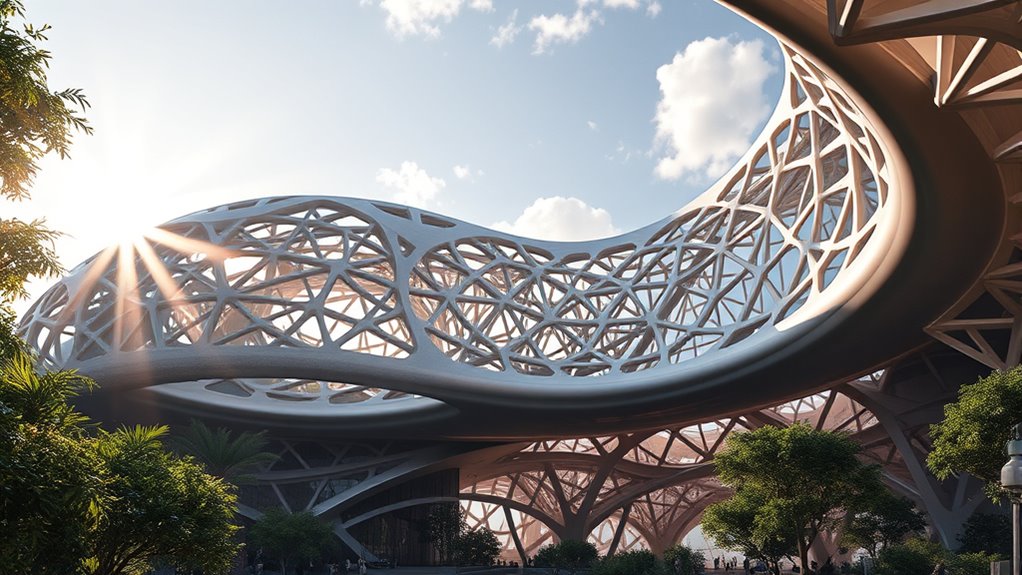

Generative design empowers you to explore structures in ways you might never have imagined. By leveraging artificial intelligence, it automates the creation of countless design options based on your specific parameters, like materials and performance needs. This process not only enhances aesthetic appeal but also promotes material efficiency and sustainability. As a result, you get innovative designs that perfectly balance beauty and function. There’s so much more to discover about its impact and applications.
Key Takeaways
- Generative design uses AI to create numerous innovative design variations based on specific parameters and constraints.
- It merges technology and art, producing aesthetically pleasing forms that enhance functionality.
- The approach minimizes material usage and reduces waste while maintaining structural integrity.
- Industries benefit from time and resource savings, enabling designers to explore new creative horizons.
- Generative design unlocks unique forms, enhancing both beauty and performance in various applications.
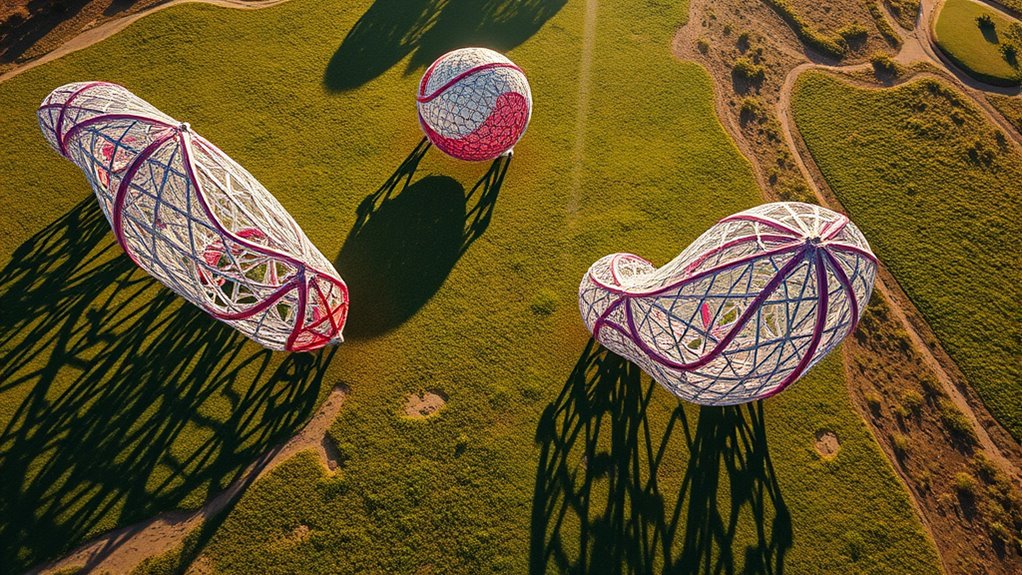
Have you ever wondered how technology can transform the design process? If you’re involved in architecture, engineering, or product design, generative design is one of the most groundbreaking advancements you should keep an eye on. This innovative approach leverages artificial intelligence to explore a multitude of design options based on specific constraints and requirements. Instead of manually creating one or two designs, you can now input parameters like materials, manufacturing methods, and performance criteria, and let the software generate countless possibilities.
One of the most appealing aspects of generative design is its ability to foster aesthetic innovation. You might think that merging technology with art would compromise creativity, but the opposite is true. By utilizing algorithms and computational power, generative design can produce shapes and forms that you may not have envisioned on your own. It opens a door to new design languages, allowing you to explore unique styles and features that not only meet functional needs but also enhance visual appeal. Imagine presenting a structure or product that captivates with its beauty, while being optimized for performance. It’s a win-win scenario.
Generative design merges technology with creativity, unlocking unique forms that enhance both beauty and performance.
Moreover, generative design excels in promoting material efficiency. Traditional design often involves guesswork regarding material usage, which can lead to waste and higher costs. With generative design, you can set parameters that focus on minimizing material usage without compromising strength or durability. The algorithms analyze various configurations to find the most efficient designs, which can considerably reduce waste during production. You’ll find that structures created through generative design often utilize materials in ways that are not only economical but also innovative, leading to strengths and efficiencies you might not have considered. For example, in the same way that newborn bath tubs must prioritize safety and efficiency, generative design can optimize structural integrity while reducing resource consumption.
As you explore more thoroughly into the world of generative design, you’ll see how it’s revolutionizing industries. The ability to automate and optimize the design process allows you to save time and resources, freeing you up to focus on the creative aspects of your projects. Whether you’re designing a bridge, a car, or a piece of furniture, generative design empowers you to push boundaries and explore new horizons.
Generative AI Design Patterns: Solutions to Common Challenges When Building GenAI Agents and Applications
As an affiliate, we earn on qualifying purchases.
As an affiliate, we earn on qualifying purchases.
Frequently Asked Questions
What Industries Benefit Most From Generative Design Technologies?
Industries like aerospace and automotive benefit immensely from generative design technologies. In aerospace innovation, you’ll see lighter, stronger components that enhance fuel efficiency and performance. Meanwhile, automotive efficiency improves through optimized parts that reduce weight and increase durability, ultimately leading to better fuel economy. By adopting generative design, you’re not just embracing advanced technology; you’re also paving the way for smarter, more sustainable solutions in these competitive fields.
Are There Any Limitations to Generative Design Applications?
Yes, there are limitations to generative design applications. You’ll find that creative constraints can hinder the flexibility of designs, forcing you to adhere to specific parameters. Additionally, computational limits may restrict the complexity of the structures you can create, especially when processing power is insufficient. Balancing these factors is essential, as they can impact the overall effectiveness and feasibility of the designs you aim to achieve with generative design technologies.
How Does Generative Design Impact Sustainability in Construction?
Generative design considerably enhances sustainability in construction, doesn’t it? By optimizing structures, it promotes material efficiency, reducing waste and minimizing the environmental impact of building projects. Additionally, it can lead to designs that prioritize energy conservation, using less energy throughout a building’s lifecycle. As you embrace generative design, you’ll not only create innovative solutions but also contribute to a greener future, making a positive difference in the construction industry and beyond.
What Software Tools Are Commonly Used for Generative Design?
Common software tools for generative design include Rhino, Grasshopper, Autodesk Fusion 360, and Siemens NX. You’ll find that these applications utilize parametric modeling and computational algorithms to create innovative designs. With these tools, you can explore complex geometries and optimize performance efficiently. They allow you to experiment with various parameters, helping you achieve tailored solutions for your projects. Embracing these technologies can profoundly enhance your design process and outcomes.
Can Generative Design Be Used for Small-Scale Projects?
Yes, generative design can definitely be used for small-scale projects. You’ll find it particularly useful in tackling micro scale innovations, where precision and customization are key. However, you might face some customization challenges, as adapting designs to unique requirements can be tricky. Still, the ability to explore countless design alternatives in a short time makes it a valuable tool even for smaller endeavors. Embrace the potential to enhance your projects creatively!

Algorithms and Data Structures: The Basic Toolbox
Used Book in Good Condition
As an affiliate, we earn on qualifying purchases.
As an affiliate, we earn on qualifying purchases.
Conclusion
In conclusion, generative design is revolutionizing how we create structures, pushing the boundaries of human imagination. With AI algorithms analyzing countless design possibilities, it’s no wonder that companies report an average 20% reduction in material costs and a 30% decrease in time to market. As you embrace this innovative approach, you’ll unlock new efficiencies and creativity, allowing you to craft solutions that elevate your projects to new heights. The future of design is here, and it’s truly remarkable.
AAD Algorithms-Aided Design: Parametric Strategies using Grasshopper
As an affiliate, we earn on qualifying purchases.
As an affiliate, we earn on qualifying purchases.

3D Printer Tool Kit, 32Pcs 3D Printing Deburring Tool, Craft Knife,Hand File,Carving Knife,Spirit Level,Cutting and Cleaning Set Box 3D Printer Accessories for Printing
【Professional Versatility & Wide Application】The set comes with all the essential tools, which is very suitable for 3D…
As an affiliate, we earn on qualifying purchases.
As an affiliate, we earn on qualifying purchases.