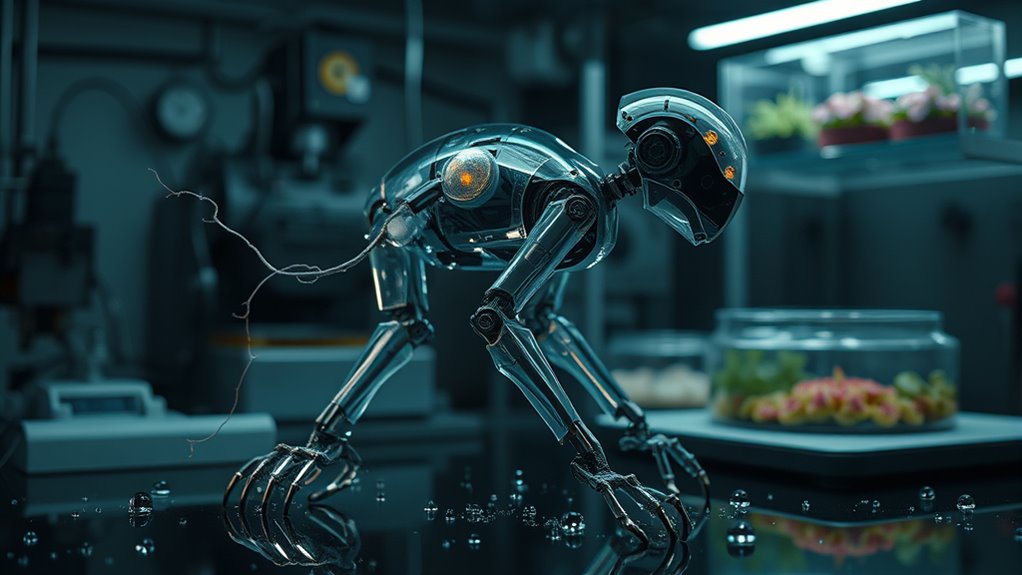

Biohybrid robots blend living cells with machines to create highly adaptable systems. These innovative robots can enhance functionality in healthcare by providing real-time health monitoring and personalized treatments. They can also improve environmental monitoring, responding to pollutants effectively. By integrating biological components, these robots not only mimic life but actively engage with their surroundings. This fusion opens up exciting possibilities in various fields. Keep exploring to discover more about the fascinating future of biohybrid robotics!
Key Takeaways
- Biohybrid robots combine living cells with machines, enhancing functionality and adaptability through biological integration.
- Robotic biointerfaces facilitate communication between synthetic parts and living cells for effective interaction and responsiveness.
- In healthcare, these robots enable real-time monitoring and personalized treatments by interpreting biological signals.
- Environmental applications include detecting pollutants and autonomously activating biological components to remediate toxins.
- Challenges remain in developing sustainable biointerfaces and ensuring the longevity of biological components within these systems.
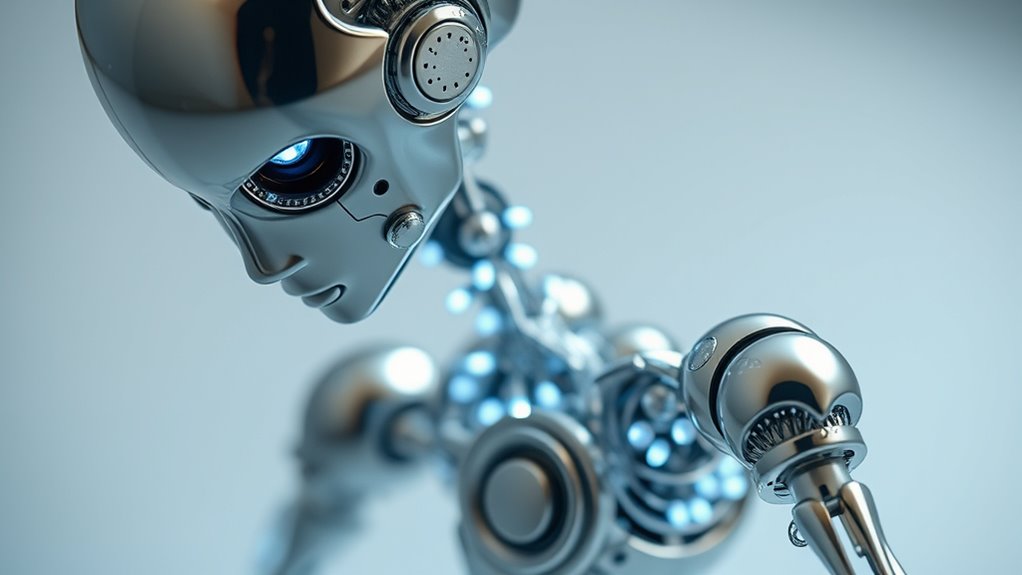
What if robots could seamlessly integrate biological components to enhance their functionality? Imagine a world where machines don’t just mimic life but actively incorporate living cells to create biohybrid robots. This fusion of biology and technology could revolutionize industries, from healthcare to environmental monitoring. By leveraging cell matrix interactions, these robots would harness the best of both worlds, markedly boosting their adaptability and efficiency.
Imagine a future where robots incorporate living cells, merging biology and technology to revolutionize healthcare and environmental monitoring.
As you dive deeper into the concept of biohybrid robots, you’ll realize the significance of robotic biointerfaces. These interfaces serve as the vital link between synthetic components and living cells, allowing for effective communication and interaction. By designing these biointerfaces with precision, engineers can guarantee that cells respond appropriately to external stimuli, making the robots more responsive to their environment. This level of integration not only enhances functionality but also opens up new possibilities in robot design, leading to more versatile applications.
In fields like medicine, biohybrid robots could revolutionize patient care. Imagine robots equipped with living cells that can monitor health status in real-time, delivering medication when necessary. This could lead to personalized treatments, where the robot adapts to a patient’s specific needs. With cell matrix interactions, the robot could interpret biological signals, adjusting its operations accordingly. It’s a game-changer in how we approach healthcare. Furthermore, similar to how gorse plants provide essential nectar sources for bees, these robots could effectively utilize biological components to enhance their operational efficiency.
Environmental applications are equally exciting. Picture a biohybrid robot that can sense pollutants in water and respond by activating its biological components to break them down. Through effective cell matrix interactions, such robots could become powerful allies in the fight against pollution, contributing to cleaner ecosystems. They could operate autonomously, adapting to changing conditions while maintaining a level of sensitivity only achievable through biological integration.
However, challenges remain. Developing reliable robotic biointerfaces that can sustain living cells is a major obstacle. Researchers are constantly innovating to create materials that promote cell adhesion and function while guaranteeing the longevity of the robotic system. As these challenges are addressed, biohybrid robots could become commonplace, transforming our understanding of robotics and biology.

ACEBOTT STEM Robotics Science Kits for Adults, ESP8266 Spider Robot Building Kit, App Remote Control, Walking Crawling Fun Educational Toy for 12 + Year Old Boys, Girls, Teens, Adults Unique Gifts
Easy for Beginner: Designed for children ages 12 and up, this ACEBOTT cool spider robot features ESP8266 motherboard…
As an affiliate, we earn on qualifying purchases.
As an affiliate, we earn on qualifying purchases.
Frequently Asked Questions
What Ethical Concerns Surround the Creation of Biohybrid Robots?
When creating biohybrid robots, you should consider several ethical concerns. One major issue is animal welfare; using living cells raises questions about the rights and treatment of these organisms. Additionally, the potential for artificial consciousness complicates matters—if a biohybrid gains awareness, how do you guarantee its ethical treatment? Balancing innovation with respect for life is vital, so you must tread carefully and engage in thoughtful discussions about these implications.
How Do Biohybrid Robots Differ From Traditional Robots?
Biohybrid robots differ from traditional robots in that they combine biological integration with mechanical complexity. While traditional robots rely solely on artificial materials and programming, biohybrid robots incorporate living cells, allowing them to adapt and respond to their environment more like living organisms. This unique blend enhances functionality, enabling tasks traditional robots can’t perform. You’ll find that their ability to integrate biological systems introduces new possibilities in robotics that traditional designs simply can’t achieve.
What Are Potential Applications of Biohybrid Robots in Medicine?
Biohybrid robots could revolutionize medicine by enhancing regenerative medicine and targeted drug delivery. Imagine these robots repairing tissues or organs through cellular integration, promoting healing in ways traditional methods can’t. They can also deliver drugs directly to affected areas, minimizing side effects and maximizing effectiveness. With their ability to mimic natural processes, you’ll see advancements in personalized treatments, making healthcare more efficient and tailored to individual needs. This opens exciting new avenues for patient care.
Can Biohybrid Robots Self-Repair Using Living Cells?
Yes, biohybrid robots can self-repair using living cells. Imagine a machine that mends itself like your skin after a cut. This remarkable capability stems from cell regeneration and self-healing mechanisms found in nature. When a biohybrid robot’s material gets damaged, living cells can activate, replicating and repairing the area. You’re witnessing a blend of biology and technology, where the lines between organic life and machines blur, leading to innovative solutions for future challenges.
What Challenges Do Scientists Face in Developing Biohybrid Robots?
You’ll find that scientists face several challenges in developing biohybrid robots, particularly scalability issues and material compatibility. Ensuring that living cells function well alongside synthetic materials can be tricky, as not all materials support cellular life effectively. Additionally, scaling up these systems for practical use often leads to complications in maintaining functionality and stability. Overcoming these hurdles is essential for creating successful biohybrid robots that can operate reliably in various environments.

DYZ-103 10KN 20KN 50KN 75KN 100KN 150KN Small Column Load Cell Force Sensing Sensor for Automated Robotic Arms(20KN)
Pushbutton Switches
As an affiliate, we earn on qualifying purchases.
As an affiliate, we earn on qualifying purchases.
Conclusion
Biohybrid robots represent an exciting frontier where living cells and machines unite, creating opportunities for innovative solutions in various fields. Imagine a future where a biohybrid robot, equipped with muscle cells, can mimic human movements to assist in rehabilitation. This fusion of biology and technology holds the potential to revolutionize healthcare and environmental applications. As research progresses, these robots could enhance life, blending the organic with the synthetic in ways we’ve only begun to explore.

Musical Robots and Interactive Multimodal Systems (Springer Tracts in Advanced Robotics, 74)
Used Book in Good Condition
As an affiliate, we earn on qualifying purchases.
As an affiliate, we earn on qualifying purchases.
health monitoring robots with biological components
As an affiliate, we earn on qualifying purchases.
As an affiliate, we earn on qualifying purchases.