🔍 Read the full analysis: 13 Best Portable SSDs For Convenient File Storage At Speed In 2027 on ThorstenMeyerAI.com

Prime made for students and young adults
- Fast, free delivery for dorm and study essentials
- Prime Video and Amazon Music included
- Member-only deals
TL;DR
The supplied 2027 guide compares 13 portable SSD listings, recommending the Samsung T7 1TB as a balanced starting point and highlighting larger or faster options for heavier workloads. Its speed figures are advertised maximums, not guarantees; the source does not provide independent test results, prices or a publication date.
The original portable SSD analysis compares 13 drive listings and points everyday users toward the Samsung T7 1TB, while identifying the Samsung T9 and SanDisk Extreme 4TB models as options for larger files or heavier workloads. The guide stresses that advertised speeds depend on compatible ports and cables, and does not present independent benchmark results.
The guide ranks drives by their advertised transfer speed, capacity, connection requirements and portability, matching them to different uses rather than treating larger or faster as automatically better, much like these portable SSD options. It calls the T7 a practical starting point because its USB 3.2 Gen 2 interface offers a balance of speed and broad compatibility without requiring a Gen 2×2 port.
The Samsung T9 versions listed at 1TB, 2TB and 4TB advertise speeds up to 2,000 MB/s. The guide says reaching that potential requires a compatible USB 3.2 Gen 2×2 host connection and suitable cable. Some SanDisk Extreme listings also advertise up to 2,000 MB/s; buyers are advised to check the exact model, since listings in the same family can show different speed claims.
Capacity choices span lighter-carry 500GB models through 1TB and 2TB drives to 4TB options for larger photo, video or project libraries, including storage suited to AI applications. The guide distinguishes standard SanDisk Portable SSD models from the more rugged-style Extreme family. It does not supply a complete model-by-model specification table, prices or test data in the source material, so these recommendations should be read as buying guidance, not verified performance comparisons.
The 13 picks
- 1
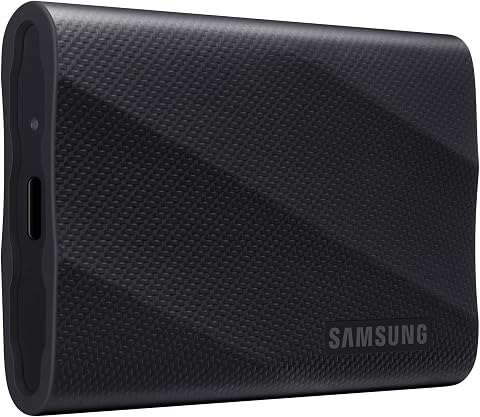 Samsung T9 Portable SSD 4TB, USB 3.2 Gen 2×2 External Solid State DriveView on Amazon →
- 2
 SanDisk Extreme Portable SSD, 4TB, Up to 2000MB/sView on Amazon →
- 3Samsung T9 Portable SSD 2TB, USB 3.2 Gen 2×2, Up to 2,000 MB/sView on Amazon →
- 4SanDisk Extreme Portable SSD, 2TB, Up to 2000MB/sView on Amazon →
- 5
 SanDisk Extreme 2TB Portable SSDView on Amazon →
- 6
 SanDisk 2TB Portable SSD, Up to 1000 MB/s Read Speed, BlackView on Amazon →
- 7Samsung T9 Portable SSD 1TB, USB 3.2 Gen 2×2, Up to 2,000 MB/sView on Amazon →
- 8SanDisk Extreme Portable SSD, 1TB, Up to 2000MB/sView on Amazon →
- 9
 Samsung T7 Portable SSD 1TB Titan Gray, USB 3.2 Gen 2, Up to 1,050MB/sView on Amazon →
- 10SanDisk 1TB Extreme Portable SSD, Up to 1050MB/sView on Amazon →
- 11SanDisk 1TB Portable SSD, Up to 1000MB/s Read Speed, BlackView on Amazon →
- 12SanDisk 500GB Portable SSD, Up to 1000MB/s Read Speed, BlackView on Amazon →
- 13
 SSK Portable SSD 500GB External Solid State Drive USB-C/USB-AView on Amazon →
Choosing Speed Your Devices Can Use
The main practical issue is whether a buyer’s computer can use the performance they are paying for. A USB-C socket does not by itself indicate transfer speed, the guide says, so a T9’s headline maximum may not be attainable on a device limited to USB 3.2 Gen 2. For users who mostly move smaller files or use slower hardware, a less expensive or less speed-focused tier may be a better fit, although the source gives no prices with which to compare value.
Capacity also affects daily use: a 500GB drive may suit a modest active project folder, while larger media libraries can call for 2TB or 4TB. The guide cautions against treating a portable SSD as the sole copy of important data. Drive choice can help with portability and workflow, but it does not replace a separate backup.
Popular right now

Ninja Prestige Smart XL 10-in-1 Air Fryer and Countertop Oven with Pro Cook System, Stainless Steel, DT551

Dyson Airwrap i.d. Multi-Styler with Bluetooth Connectivity

Vitamix 5-Speed Immersion Blender, 625-Watt, Stainless Steel/Black
As an affiliate, we earn on qualifying purchases.
How the Guide Compares Drives
The source describes its ranking as a comparison of 13 portable SSD listings, with order favoring balanced usefulness rather than headline speed alone. It considers published speed figures maximum claims and notes that host hardware, cable, file size and sustained workload can affect actual transfers.
Its selection advice is to match the drive to devices and files already in use. Buyers should check the exact model’s specifications, connection standard and formatting needs, particularly when moving a drive between computers, tablets or phones. Reformatting may address some compatibility issues, but erases existing contents, so files need to be copied elsewhere first.
“The Samsung T7 is the balanced starting point.”
— ThorstenMeyerAI.com buying guide
Performance and Listing Details
The source does not identify the guide’s publication date, provide independent test results, list prices, or establish that every model is available in 2027. It also does not give a full inventory of the 13 distinct picks in the supplied material, so a buyer cannot use this account alone to verify every product name, capacity or specification.
Actual transfer speeds remain uncertain without testing the specific drive, host port, cable and workload. The guide also says some listings with similar names and capacities have different advertised speed claims; the precise model and its documented specifications should be checked before purchase. Rugged-style branding alone does not establish a particular protection rating.
Check Models Before Buying
The next step for buyers is to confirm the exact model and capacity, then compare its documented interface with the ports and cables on the devices they plan to use. Those considering a T9 or a high-speed Extreme listing should specifically verify USB 3.2 Gen 2×2 support; those choosing a rugged-style drive should check the protection details for that exact product.
The source provides no future product announcement or scheduled update. Until fuller specifications, current pricing and independent performance tests are available, treat the ranking as a selection guide rather than a measured head-to-head test, and keep a second copy of important files.
Key Questions
Which drive does the guide recommend for most buyers?
It names the Samsung T7 1TB as a balanced starting point, citing its USB 3.2 Gen 2 connection and everyday-use positioning.Will a Samsung T9 always reach 2,000 MB/s?
No. The guide describes up to 2,000 MB/s as an advertised maximum and says approaching it requires a compatible USB 3.2 Gen 2×2 host and suitable cable. Actual results depend on the setup and workload.How much capacity should I choose?
The guide presents 500GB as an option for lighter carry needs, with 1TB or 2TB for more room and 4TB for larger media or project libraries. The right choice depends on the files you plan to keep; the source provides no price comparison.Does the guide provide independent speed tests?
No independent benchmark results are included in the supplied material. Its rankings use advertised specifications and intended use, and it warns that actual transfers can differ.Can one portable SSD serve as my backup?
The guide advises against keeping the only copy of important files on a portable SSD. Maintain a separate second copy because a single drive does not protect against loss or failure.Source: ThorstenMeyerAI.com