Neuromorphic computing gives you a glimpse into how machines can enhance creative thinking. By mimicking the brain’s neural architecture, these systems adapt and learn, much like you do. They integrate sensory inputs to generate innovative ideas, providing fresh perspectives and improving problem-solving. This synergy between technology and human creativity can revolutionize your approach to tasks, expanding your imaginative capacities. There’s plenty more to discover about how this technology can transform your creative processes.
Key Takeaways
- Neuromorphic computing mimics human brain architecture, enhancing cognitive processes and enabling machines to generate creative solutions through artificial neural networks.
- Brain plasticity in neuromorphic systems allows for reconfiguration of pathways, promoting continuous learning and refinement of creative processes over time.
- Sensory integration enables machines to synthesize diverse inputs, emulating human perception and facilitating innovative idea generation through holistic understanding.
- AI tools powered by neuromorphic systems enhance human creativity, providing fresh insights and collaborative opportunities that revolutionize traditional problem-solving methods.
- The synergy of brain plasticity and sensory integration in neuromorphic computing can lead to breakthroughs across various fields, inspiring new creative avenues.
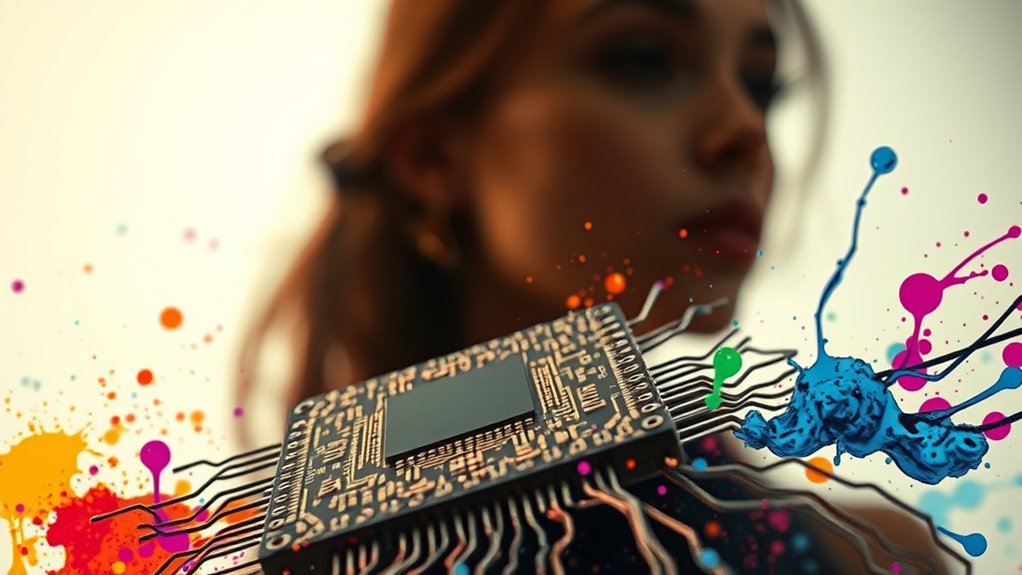
As you explore the fascinating intersection of neuromorphic computing and creative thinking, you’ll discover how this cutting-edge technology mimics the human brain’s neural architecture to enhance cognitive processes. Neuromorphic computing is designed to replicate the brain’s efficiency, enabling machines to learn and adapt in ways that resemble human thought. This connection to brain plasticity—the brain’s ability to reorganize itself by forming new neural connections—opens up exciting possibilities for fostering creativity.
Imagine a world where machines can not only analyze data but also generate innovative solutions through sensory integration, much like how your brain synthesizes information from various senses to create a holistic understanding. When you engage in creative thinking, you often draw on multiple sensory inputs, weaving them together to form new ideas. Neuromorphic systems endeavor to emulate this by using a network of artificial neurons that communicate efficiently, processing sensory data to stimulate creative outputs.
Machines can generate innovative solutions through sensory integration, mimicking the brain’s ability to synthesize information for creative thinking.
As you probe deeper, you’ll see how these systems incorporate principles of brain plasticity to enhance their learning capabilities. Just as your brain adapts when you learn new skills or encounter new experiences, neuromorphic systems can reconfigure their neural pathways based on input and feedback. This adaptability enables them to refine their creative processes over time, making them more effective at generating novel ideas.
You might wonder how this technology can enhance your own creative thinking. By integrating neuromorphic systems into your creative practices, you can tap into a new realm of possibilities. For instance, consider how AI tools powered by neuromorphic computing could assist you in brainstorming sessions, providing fresh perspectives and insights that you might not have considered. The collaborative potential between human creativity and machine learning is vast, and as these systems evolve, they could serve as invaluable partners in your creative endeavors.
Furthermore, the synergy between brain plasticity and sensory integration in neuromorphic computing could lead to breakthroughs in various fields. Whether it’s art, science, or technology, the ability of these systems to adapt and learn could revolutionize how you approach problem-solving. As you embrace this intersection of technology and creativity, you’ll find that the possibilities are limited only by your imagination. In this evolving landscape, you’ll be inspired to push boundaries and explore novel avenues of thought, ultimately enriching your creative journey. Additionally, the exploration of Italian espresso culture can further inspire creativity in your daily routines, blending tradition with innovation.
Machine Learning System Design Mastery: End-to-End Strategies for AI Interviews and Production Success
As an affiliate, we earn on qualifying purchases.
As an affiliate, we earn on qualifying purchases.
Frequently Asked Questions
What Are the Main Differences Between Neuromorphic Computing and Traditional Computing?
The main differences between neuromorphic computing and traditional computing lie in their brain architecture and processing paradigms. Neuromorphic systems mimic the brain’s neural networks, allowing for parallel processing and energy efficiency, while traditional computing relies on sequential processing and rigid architectures. You’ll find that neuromorphic computing excels in tasks requiring adaptability and learning, whereas traditional systems are better suited for structured calculations and predictable tasks. Each has its strengths, shaped by their underlying principles.
How Can Neuromorphic Computing Enhance Artistic Expression?
Imagine a painter’s brush dancing across a canvas. Neuromorphic computing enhances artistic expression by using artistic algorithms that mimic human brain processes. You can create more immersive experiences through sensory integration, blending sound, visuals, and touch in ways traditional computing can’t. This technology allows you to experiment with new forms, pushing boundaries and inspiring fresh ideas. By tapping into these advanced systems, you’ll open a world of creativity and innovation.
What Industries Are Most Likely to Benefit From Neuromorphic Computing?
You’ll find that industries like healthcare, gaming, and automotive are set to benefit notably from neuromorphic computing. In healthcare, brain-machine interfaces can improve patient care through personalized AI, enhancing diagnostics and treatment plans. The gaming industry can create more immersive experiences, while automotive companies can develop smarter, safer vehicles. These advancements will lead to more intuitive interactions and better overall performance, revolutionizing how we engage with technology in everyday life.
Are There Ethical Concerns Related to Neuromorphic Computing?
Yes, there are ethical concerns related to neuromorphic computing. You should consider AI ethics, as these systems might make decisions that impact lives without human intervention. Privacy concerns also arise since they can process vast amounts of personal data, potentially leading to misuse. As you explore this technology, it’s essential to weigh the benefits against these ethical dilemmas to guarantee responsible development and deployment, keeping society’s best interests in mind.
How Does Creative Thinking Impact Technological Innovation in Neuromorphic Systems?
Creative thinking drives technological innovation in neuromorphic systems by embracing biological inspiration and enhancing cognitive flexibility. You’ll notice that when you explore new ideas, you often stumble upon unexpected solutions. This coincidence highlights how mimicking the brain’s processes leads to breakthroughs in system design. By fostering an environment where unconventional thoughts thrive, you can push the boundaries of what’s possible, ultimately creating more advanced, efficient, and adaptable neuromorphic technologies.

Make Your Own Neural Network
As an affiliate, we earn on qualifying purchases.
As an affiliate, we earn on qualifying purchases.
Conclusion
In the world of neuromorphic computing, where machines mimic the human brain, the intersection with creative thinking opens exciting possibilities. As the saying goes, “necessity is the mother of invention.” By embracing this technology, you’re not just enhancing computational efficiency; you’re also releasing new avenues for creativity. Imagine a future where machines inspire human innovation and push the boundaries of imagination. Together, we can harness these advancements to revolutionize how we think, create, and solve problems.

Sensory Integration: A Guide for Preschool Teachers
Used Book in Good Condition
As an affiliate, we earn on qualifying purchases.
As an affiliate, we earn on qualifying purchases.

Neuromorphic Computing: Architectures That Think Like Us VOL-I: Designing Brain-Inspired Systems for the Future of AI and Computing (Artificial Intelligence & Machine Learning)
As an affiliate, we earn on qualifying purchases.
As an affiliate, we earn on qualifying purchases.