Algorithmic choreography combines the artistry of dancers with the precision of robots to create stunning new movements. You’ll witness how these robotic performers respond to human actions in real-time, enhancing the dance experience. This innovative fusion expands creative possibilities, pushing traditional boundaries and transforming the way we perceive dance. As this integration continues to evolve, you’ll discover even more about the mesmerizing future of movement and technology.
Key Takeaways
- Algorithmic choreography merges technology and human creativity, resulting in innovative dance movements that expand expressive possibilities.
- Robots can synchronize with dancers in real-time, enhancing performances through dynamic interactions and intricate pattern replication.
- Choreographers use programming to design complex routines, allowing for a limitless exploration of new dance patterns and combinations.
- Human-robot interaction fosters a dialogue that challenges traditional performance boundaries, creating evolving and captivating dance experiences.
- The fusion of art and technology in algorithmic choreography reshapes audience perceptions and participation in dance, blurring lines between human and machine.
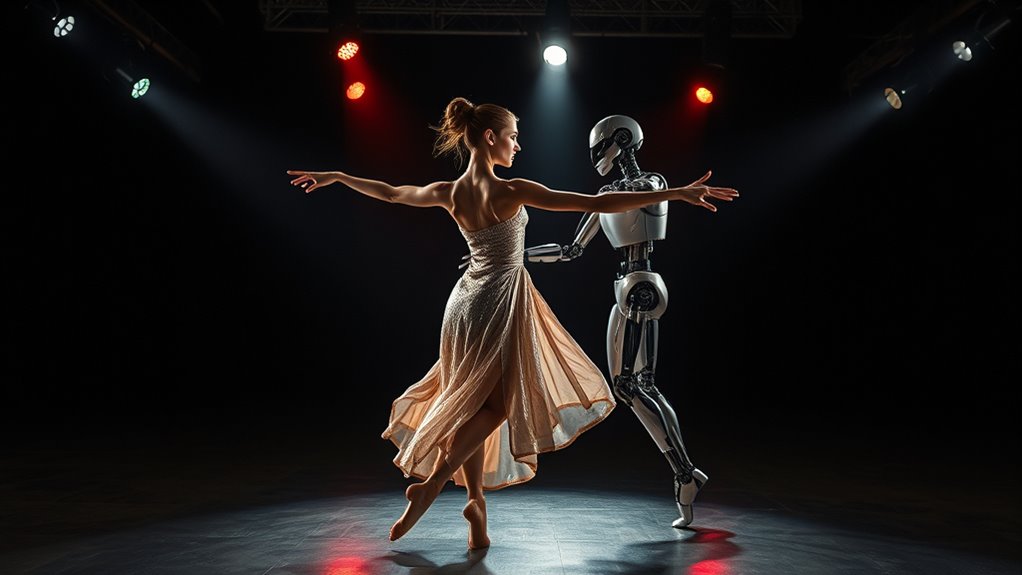
How does technology transform the art of dance? You might not realize it, but the intersection of technology and dance is reshaping how you experience movement and creativity. One fascinating aspect is algorithmic choreography, where dancers and robots collaborate to create innovative performances. This blend of human artistry and machine precision opens up new avenues for expression, pushing the boundaries of what dance can be.
The fusion of technology and dance redefines creativity, showcasing the extraordinary collaboration between human artistry and robotic precision.
Robotic synchronization plays a vital role in this transformation. When you watch a performance featuring both dancers and robots, you’ll notice the seamless integration of human movements with robotic precision. The robots respond to the dancers in real-time, creating a dynamic interplay that captivates audiences. This synchronization isn’t just about mimicking human motion; it’s about enhancing the performance. The robots can replicate intricate patterns and execute movements with a level of accuracy that’s difficult for humans to achieve alone. This not only elevates the overall experience but also challenges you to reconsider the limitations of traditional dance.
Dance programming is another key element in this evolving art form. You might wonder how choreographers are using technology to craft these unique performances. With dance programming, they can design complex routines that incorporate both human and robotic elements. By using algorithms, choreographers can explore new patterns, variations, and combinations that wouldn’t be possible through traditional methods. The programming allows for an endless array of possibilities, enabling you to witness performances that are unexpected and exhilarating.
Imagine attending a show where the dancers interact with robots that respond to their movements. The robots might adjust their speed and style based on the dancers’ expressions and rhythms, creating a living, breathing performance that’s constantly evolving. This interaction requires a deep understanding of both dance and technology, and it challenges you to think about the relationship between the two. It’s not just about the robots performing alongside dancers; it’s about creating a dialogue between human creativity and technological innovation.
In this new era of dance, you’ll find yourself at the edge of your seat, witnessing a fusion of art and technology that’s both mesmerizing and thought-provoking. As algorithmic choreography continues to develop, it’ll reshape not just how you view dance, but also how you participate in it, blurring the lines between human and machine, art and science. Embrace this evolution, and you’ll discover a world of possibilities waiting to be explored.
Frequently Asked Questions
How Do Robots Learn New Dance Movements?
Robots learn new dance movements through a process called robot learning, where they analyze and imitate human movements. They use sensors and algorithms to gather data on body positions and rhythms, which helps them adapt their movements. By observing various dance styles, robots refine their techniques, adjusting to different tempos and sequences. This movement adaptation allows them to perform intricate routines and collaborate more effectively with human dancers in a dynamic environment.
What Programming Languages Are Used for Algorithmic Choreography?
When you think of robotic improvisation, languages like Python and JavaScript often take center stage. They’re the brushstrokes that bring dance notation to life, allowing the rhythm of movement to flow seamlessly. Just as a conductor guides an orchestra, these programming languages direct robots in crafting unique choreography. Each line of code ignites the spark of creativity, turning cold metal into a graceful dancer, leaving you in awe of their artistic expression.
Can Algorithmic Choreography Be Used in Live Performances?
Yes, algorithmic choreography can definitely be used in live performances. When you integrate technology with dance, you create a unique experience that enhances human emotionality. The audience perceives these innovative movements as fresh and engaging, sparking deeper emotional connections. You’ll notice how the blend of human dancers and programmed sequences can evoke a range of feelings, making each performance memorable. It’s a fascinating way to push artistic boundaries and captivate viewers.
What Are the Limitations of Robots in Dance?
Robots in dance face limitations that can dim their graceful glow. Their dance precision often lacks the fluidity and emotional depth of human performers, making routines feel mechanical. When they attempt intricate movements, they can stumble, failing to capture the essence of spontaneity and connection. You might notice their rigid motions, unable to convey the raw energy and improvisation that dancers effortlessly express, leaving a void in the performance’s emotional landscape.
How Do Dancers Collaborate With Robots in Choreography?
Dancers collaborate with robots in choreography by engaging in robot improvisation, where they interact and respond to each other’s movements. You, as a choreographer, can guide this collaboration by setting parameters and allowing space for creativity. The dancer’s physicality complements the robot’s precision, leading to unique expressions. This partnership not only enhances the choreography but also challenges traditional boundaries, allowing both dancers and robots to discover new movement possibilities together.
Conclusion
As robots and dancers intertwine, they craft a vivid tapestry of movement that blurs the line between the mechanical and the organic. You witness the precision of algorithms dancing alongside the spontaneity of human expression, each step a testament to collaboration. In this domain, creativity isn’t confined to flesh and bone; it expands, echoing the rhythm of technology. Together, they redefine artistry, proving that innovation can leap beyond mere code, transforming into a language that resonates with the soul.