Agentic AI is revolutionizing artistic production by collaborating with human creators. You’ll find AI systems composing music, generating visuals, and writing poetry, often making it hard to tell who or what created the artwork. This partnership between humans and intelligent algorithms not only enhances creativity but also raises questions about authorship and emotional depth. As the lines blur, exciting possibilities for innovation emerge in art. Explore the nuances behind this transformative journey further.
Key Takeaways
- Agentic AI systems are capable of creating music, poetry, and visual art, redefining artistic production processes.
- AI analyzes extensive datasets to learn patterns, producing art that can mimic human creativity.
- The integration of AI in art challenges traditional notions of authorship and emotional depth in creative works.
- Concerns about artistic homogenization arise due to the widespread use of similar algorithms in generative AI.
- The future of art hinges on a collaborative approach between human artists and AI, fostering innovation and diversity.
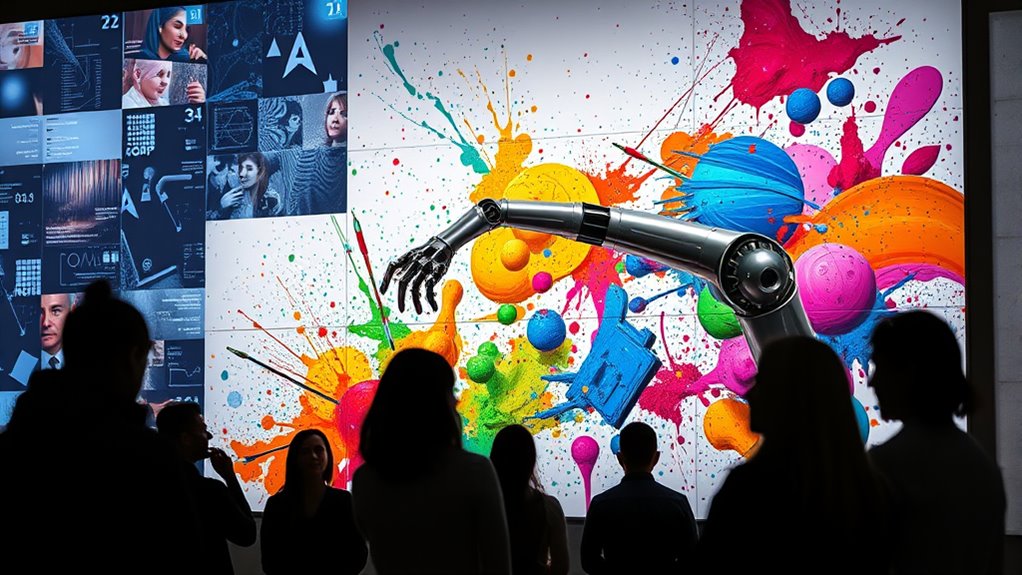
What happens when creativity meets technology? You find yourself in a sphere where art is no longer just a product of human imagination but a collaboration between human minds and intelligent algorithms. As you explore this dynamic landscape, you’ll discover the rise of agentic AI, a force that’s reshaping artistic production. With algorithms capable of generating unique ideas and forms, the lines between creator and creation blur, inviting you to rethink traditional notions of authorship and artistry.
Algorithmic creativity is at the heart of this transformation. You might have heard about AI systems that can compose music, write poetry, or even paint stunning visuals. These systems analyze vast datasets, learn patterns, and generate works that can be indistinguishable from those created by humans. This evolution opens up exciting possibilities, allowing you to experiment with new art forms and push the boundaries of what’s considered creative expression. As you engage with these technologies, your own creative process can become more collaborative, as you harness the power of AI to enhance your artistic vision.
However, delving into this domain isn’t without its challenges. The ethical implications of agentic AI in art are a topic worth pondering. As you witness AI-generated masterpieces, you might question the value of human touch in art. Can a piece created by an algorithm evoke the same emotional response as one crafted by a human hand? And what about ownership? When an AI creates something new, who gets the credit? You’ll need to consider the potential consequences of relying too heavily on machines for creative output.
Moreover, there’s the risk of homogenization. If everyone begins to use the same algorithms, will art lose its diversity? The uniqueness that comes from human experience might get overshadowed by AI’s tendency to replicate and remix existing styles. As you navigate these questions, it’s essential to strike a balance between embracing technological advancements and preserving the essence of human creativity. Recent developments in generative AI indicate that creators using AI tools can see a significant boost in productivity, which may further influence artistic exploration.
In the end, the rise of agentic AI in artistic production presents both thrilling opportunities and complex challenges. As you engage with this new frontier, you’ll play a part in shaping the future of art, ensuring that it remains a vibrant tapestry woven from both human and machine creativity. Embrace the journey, and let your imagination soar alongside the algorithms.
Artifi.AI Art Generator – Anime Free AI Image Generator – Photo Editor – Picture Background Remover
Artifi.AI Art Generator Key Features
As an affiliate, we earn on qualifying purchases.
As an affiliate, we earn on qualifying purchases.
Frequently Asked Questions
Can Agentic AI Create Art Without Human Intervention?
Yes, agentic AI can create art without human intervention. With advancements in technology, these systems exhibit autonomous creativity, allowing them to generate unique pieces independently. You’ll find that AI independence has led to diverse artistic expressions, from painting to music composition. While some argue that human oversight is essential for true artistry, others embrace the idea of machines exploring creative domains on their own, reshaping how we think about art and its creation.
What Are the Ethical Implications of Ai-Generated Art?
The ethical implications of AI-generated art include authenticity concerns and cultural appropriation. You might worry that AI art lacks genuine emotional depth, making it harder to connect with. Additionally, AI can inadvertently mimic cultural styles without proper understanding or respect, leading to appropriation. This raises questions about ownership and representation. As you engage with AI art, it’s essential to contemplate these factors to ensure a responsible and respectful appreciation of diverse artistic expressions.
How Does Agentic AI Learn Artistic Styles?
Agentic AI learns artistic styles through neural networks by analyzing vast datasets of existing art. It uses a technique called style transfer, where it separates content from style in images. You’ll see the AI absorbing patterns, colors, and techniques from various artists. By training on these elements, it can recreate or blend styles, allowing you to generate unique pieces that reflect the nuances of different artistic influences while maintaining its own creative flair.
Are There Copyright Issues With Ai-Created Art?
You might say there’s a bit of a gray area when it comes to copyright issues with AI-created art. While the technology can mimic artistic originality, it often raises questions about intellectual property. Who owns the rights if an AI creates something unique? It can get complicated, as traditional concepts of authorship don’t easily apply. Steering through this landscape requires careful consideration of both legal frameworks and creative intentions behind the art.
What Tools Are Used to Develop Agentic AI for Art?
To develop agentic AI for art, you’ll find tools like machine learning frameworks and neural networks essential. These technologies allow you to train models that can generate unique artistic styles and compositions. Popular platforms like TensorFlow and PyTorch provide the necessary resources for building and fine-tuning these models. By utilizing datasets of existing artworks, you can enhance the AI’s ability to create original pieces that resonate with human creativity.

Unlock Suno: Studio Edition: The Professional Guide to Generative Audio Production (Updated for 2026) (AI Music Producer Series)
As an affiliate, we earn on qualifying purchases.
As an affiliate, we earn on qualifying purchases.
Conclusion
As agentic AI continues to shape artistic production, it’s redefining creativity, challenging conventions, and inspiring collaboration. You’ll witness machines that not only create but also innovate, machines that don’t just assist but also provoke. This evolution invites you to explore uncharted territories of expression, where human intuition meets algorithmic prowess. Embrace this new era, where art transcends boundaries, and every brushstroke of code reveal a masterpiece, blending imagination and technology in a dance of endless possibilities.

SwitchBot AI Art Frame 13.3'', Electronic Ink Picture Frame, Wireless Digital Photo Frame, Long Battery Life, Alexa Compatible, Wall Decoration, Home Décor, AI-Generated Art, Gift for Art Lovers
Wireless Design, Place It Anywhere: Enjoy a clutter-free setup with no wires required, letting you display the frame…
As an affiliate, we earn on qualifying purchases.
As an affiliate, we earn on qualifying purchases.

Evan-Moor Writing Poetry with Children, Grade 1-6 Activity Book – Supplemental Teaching Resource Workbook Inspires Poets (Writing Skills Essentials)
As an affiliate, we earn on qualifying purchases.
As an affiliate, we earn on qualifying purchases.