
📊 Full opportunity report: The Manufacturing Sector Turns To AI: Siemens Leads The Way on ThorstenMeyerAI.com — validation score, market gap, and execution plan.
TL;DR
Siemens is pioneering the integration of AI into manufacturing through its Industrial Foundation Model and a partnership with NVIDIA. The company aims to embed AI across industrial processes, emphasizing domain expertise and proprietary data. The initiative signals a significant shift in industrial automation, though some details remain unconfirmed.
Siemens has announced a major strategic initiative to embed artificial intelligence into manufacturing processes, partnering with NVIDIA to develop an Industrial AI Operating System intended to transform factory automation and engineering workflows. This marks a significant shift from the common focus on chatbots and language AI to physical-world industrial applications, emphasizing domain-specific models and proprietary data.
The core of Siemens’ approach is the Industrial Foundation Model (IFM), designed to process and contextualize 3D models, 2D drawings, sensor telemetry, and automation data, aiming to optimize engineering and manufacturing. Announced at Hannover Messe 2025, Siemens claims this model will enable more accurate and faster simulations tailored for industrial use.
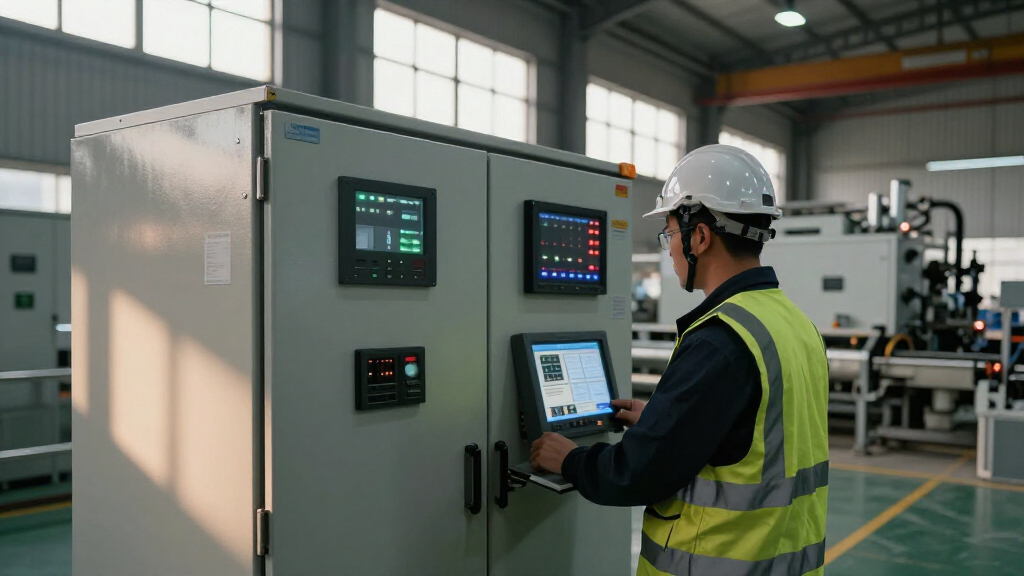
In collaboration with NVIDIA, Siemens is building an Industrial AI Operating System that will support GPU-accelerated simulation, generative digital twins, and real-time system optimization. The first fully AI-driven factory is scheduled to open in 2026 at Siemens’ Electronics Factory in Erlangen, Germany, serving as a blueprint for future global deployment. Early applications include PepsiCo’s facility simulations and nine industrial copilots across the supply chain.
Siemens asserts that its advantages lie in its proprietary, domain-specific data, extensive industrial expertise, and existing customer relationships with major manufacturers like PepsiCo and Audi. However, critics note that much of the AI infrastructure relies on NVIDIA’s hardware and software, raising questions about sovereignty and dependency.
The factory floor,
not the chat window.
Siemens’ bet: the biggest untapped AI value is physical — machines, factories, infrastructure — and 175 years of industrial data plus NVIDIA compute beats any frontier lab there. The vehicle: an Industrial Foundation Model and an “Industrial AI Operating System.”
A different language than text
Proprietary + physical data no frontier lab can scrape — the same “specialist beats generalist” logic this week keeps documenting, applied to steel and silicon.
Honest bull / bear
Bull
- Proprietary physical data no lab can replicate
- Domain expertise IS the barrier to entry
- Customers (PepsiCo, Audi) already in the base — warm motion
- Generative simulation: digital twins that engineer, not just mirror
Bear
- The “OS” runs substantially on NVIDIA’s stack — American silicon under a European champion
- No validated performance metrics or timelines disclosed at CES
- Geological sales cycle: decade-scale replacement
- “Industrial AI” now crowded (Palantir, Qualcomm moving in)
industrial AI software for manufacturing
As an affiliate, we earn on qualifying purchases.
As an affiliate, we earn on qualifying purchases.
Why Siemens’ Industrial AI Strategy Matters
This initiative signals a potential paradigm shift in manufacturing, where AI moves beyond digital assistants to become a core component of physical production and engineering. Siemens’ focus on domain-specific models and proprietary data could give it a competitive edge in industrial automation, especially as factories become more autonomous and efficient. The partnership with NVIDIA accelerates this transition but also raises concerns about reliance on American technology and the pace of adoption given the long sales cycles typical in industrial markets.
GPU-accelerated simulation tools for factories
As an affiliate, we earn on qualifying purchases.
As an affiliate, we earn on qualifying purchases.
Industrial AI’s Evolving Landscape and Siemens’ Role
While AI development has largely centered on language models and consumer applications, industrial AI remains an emerging frontier. Siemens’ announcement at Hannover Messe 2025 and CES 2026 underscores its commitment to leading this shift, leveraging its extensive industrial data and domain expertise. Industry observers note that other tech firms like Palantir and Qualcomm are also entering adjacent industrial AI markets, making Siemens’ leadership position more competitive but also more contested.
Historically, industrial automation has relied on legacy systems and slow adoption cycles, but the integration of AI promises more dynamic, adaptive manufacturing processes. Siemens’ strategy aims to accelerate this transformation by embedding AI into the core of factory operations.
“Industrial AI is no longer a feature; it’s a force that will reshape the next century.”
— Roland Busch, Siemens CEO
digital twin software for manufacturing
As an affiliate, we earn on qualifying purchases.
As an affiliate, we earn on qualifying purchases.
Unconfirmed Aspects of Siemens’ Industrial AI Ambitions
Many specific details remain unconfirmed, including the exact hardware configurations for the Industrial AI Operating System, performance metrics of the digital twins, and the timeline for full deployment at the Erlangen factory. Independent validation of the claimed capabilities has not yet been disclosed, and the long sales cycles typical of industrial markets may slow adoption.
Additionally, reliance on NVIDIA’s infrastructure raises questions about technology sovereignty, especially for European customers concerned about dependency on American silicon and software.
industrial IoT sensors and telemetry devices
As an affiliate, we earn on qualifying purchases.
As an affiliate, we earn on qualifying purchases.
Next Steps in Siemens’ Industrial AI Deployment
Siemens plans to launch its fully AI-driven factory in Erlangen in 2026, serving as a model for global expansion. The company will also introduce Digital Twin Composer and expand its industrial copilots across supply chains. Monitoring performance metrics and independent evaluations will be critical to assess the real-world impact of these initiatives.
Industry analysts will watch for concrete results, hardware specifications, and customer case studies to gauge how quickly Siemens’ vision translates into measurable operational gains.
Key Questions
What is Siemens’ Industrial Foundation Model?
The Industrial Foundation Model (IFM) is Siemens’ AI model designed to process and contextualize industrial data such as 3D models, engineering drawings, and sensor telemetry to optimize manufacturing and engineering workflows.
How does Siemens plan to integrate AI into factories?
Through its partnership with NVIDIA, Siemens aims to develop an Industrial AI Operating System that supports GPU-accelerated simulation, generative digital twins, and real-time system optimization, starting with a factory in Erlangen in 2026.
What are the potential risks of Siemens’ AI approach?
The primary risks include dependence on NVIDIA’s hardware and software infrastructure and the slow pace of adoption due to the long sales cycles in industrial markets. There are also concerns about data sovereignty for European customers.
When will Siemens’ AI-driven factory be operational?
The fully AI-driven factory in Erlangen is scheduled to open in 2026, serving as a blueprint for future deployments worldwide.
How does Siemens’ strategy differ from general-purpose AI models?
Siemens focuses on domain-specific models trained on proprietary industrial data, unlike general-purpose models that primarily handle language or broad internet data. This specialization aims to deliver more relevant and effective AI solutions for manufacturing.
Source: ThorstenMeyerAI.com