
TL;DR
Japan’s JAXA and partners completed a ground test of a ramjet engine designed for Mach-5 hypersonic aircraft. This marks a key step toward future ultra-fast transpacific flights, potentially reducing Tokyo-LA travel to around two hours.
Japan’s Aerospace Exploration Agency (JAXA) and collaborating universities announced a successful ground test of a ramjet engine designed for Mach-5 hypersonic aircraft, a significant step toward ultra-fast transpacific travel.
The test was carried out at JAXA’s Kakuda Space Center, simulating flight conditions at five times the speed of sound (Mach 5) at an altitude of approximately 25 kilometers. The experiment focused on validating engine performance, heat shielding, and control systems under extreme thermal and aerodynamic conditions.
Engineers used a scaled-down model mounted in a wind tunnel to replicate the high-temperature environment, with surface temperature sensors confirming the effectiveness of advanced thermal protection systems. The engine relies on air-breathing ramjet technology, which compresses incoming air for combustion without moving parts, but requires initial acceleration to reach supersonic speeds.
While the current test is ground-based, plans are underway to mount the engine on a sounding rocket for an actual Mach-5 flight in the near future. If successful, this could lead to commercial hypersonic passenger flights by the 2040s, drastically reducing travel times across the Pacific.
Why It Matters
This development could revolutionize international air travel, enabling flights from Tokyo to Los Angeles in approximately two hours—comparable to a domestic trip—compared to current durations of around 10 hours. It also signifies a major technological milestone in hypersonic propulsion, thermal management, and aircraft design, with implications for future high-speed transportation and aerospace innovation.

SEBUNAS F-14 Tomcat 3D Quick Build Model Kit – Fighter Jet Aircraft Puzzle, Precision DIY Military Aircraft Building Kit for Adults, Collectible Display Aviation Hobby, STEM Engineering Gift
Experience the legendary F-14 Tomcat through a highly detailed model designed for aviation collectors and hobby enthusiasts. The…
As an affiliate, we earn on qualifying purchases.
As an affiliate, we earn on qualifying purchases.
Background
Hypersonic flight has long been a goal for aerospace engineers, with the U.S. and China conducting similar research. Japan’s recent success builds on prior ground tests and theoretical models, marking progress toward operational prototypes. Past efforts, such as NASA’s X-43 and X-59 aircraft, have demonstrated components of hypersonic technology, but full-scale operational systems remain in development. Japan’s focus on thermal protection and engine efficiency addresses key challenges that have hindered earlier attempts at sustained hypersonic travel.
“This successful ground test validates critical components of our hypersonic propulsion system, bringing us closer to real flight trials.”
— JAXA spokesperson
“Achieving Mach-5 conditions in a controlled environment is a breakthrough that can pave the way for future passenger aircraft.”
— Professor Hiroshi Tanaka, Waseda University
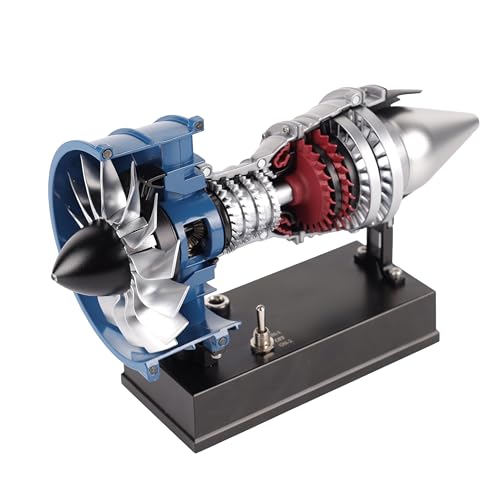
DM122 Mini Metal Turbofan Engine Model Kit That Works, 170+ Parts 1:20 Scale 4.41”H x 7”L x 3”W All-Metal Jet Engine Model with Transparent Cover, STEM Educational Assembly Kit, Desk Decoration Gift
Realistic & Authentic: The lifelike & visually stunning model provides a realistic depiction of a full-sized engine with…
As an affiliate, we earn on qualifying purchases.
As an affiliate, we earn on qualifying purchases.
What Remains Unclear
It is not yet clear when the next phase—actual flight testing—will occur, or what technical or regulatory hurdles may delay progress toward commercial deployment. Details of engine durability and safety at operational speeds remain to be demonstrated in flight conditions.

Aerospace Materials Science 5: Thermal Protection and Environmental Effects
As an affiliate, we earn on qualifying purchases.
As an affiliate, we earn on qualifying purchases.
What’s Next
JAXA plans to conduct suborbital flight tests using a sounding rocket to validate engine performance in actual hypersonic conditions. Successful flight trials could lead to further development of prototype aircraft and eventual certification for passenger use by the 2040s.

FUN-TECH-LAB Windsible, Desktop Wind Tunnel, for 1:64 Diecast Car Models, Miniature Wind Simulation, Display Stand, for Collectors and Hobbyists
Designed for 1:64 Diecast Cars: perfectly sized for 1:64 scale vehicles, Windsible brings dynamic airflow effects to your…
As an affiliate, we earn on qualifying purchases.
As an affiliate, we earn on qualifying purchases.
Key Questions
What is a ramjet engine and how does it work?
A ramjet is an air-breathing jet engine that compresses incoming air through high-speed forward motion, mixes it with fuel, and ignites it to produce thrust. It has no moving parts and requires initial acceleration to operate efficiently at hypersonic speeds.
Why is this development significant for air travel?
If operational, hypersonic aircraft could drastically reduce transpacific flight times, transforming international travel by making long-haul flights comparable to domestic trips in duration.
What are the main technical challenges remaining?
Key challenges include ensuring engine durability at extreme speeds and temperatures, developing effective thermal protection systems, and achieving regulatory approval for commercial flights.
When might we see commercial hypersonic flights?
If current progress continues, commercial hypersonic passenger flights could be possible by the 2040s, but this timeline depends on successful flight testing and regulatory developments.
Source: Hacker News