
TL;DR

Prime made for students and young adults
- Fast, free delivery for dorm and study essentials
- Prime Video and Amazon Music included
- Member-only deals
AI technology has been used to reconstruct the voices of pilots who died in a 2025 UPS plane crash. The NTSB responded by temporarily removing related investigation data from public access. This development raises questions about privacy, safety, and the use of AI in aviation investigations.
The National Transportation Safety Board (NTSB) has temporarily removed access to its investigation docket after AI-generated voices of pilots killed in a 2025 UPS plane crash circulated on the internet. This action follows the discovery that voices of deceased pilots were reconstructed using artificial intelligence, sparking safety and privacy concerns. The incident highlights the growing capabilities of AI in recreating human voices and raises questions about its ethical use in aviation investigations.
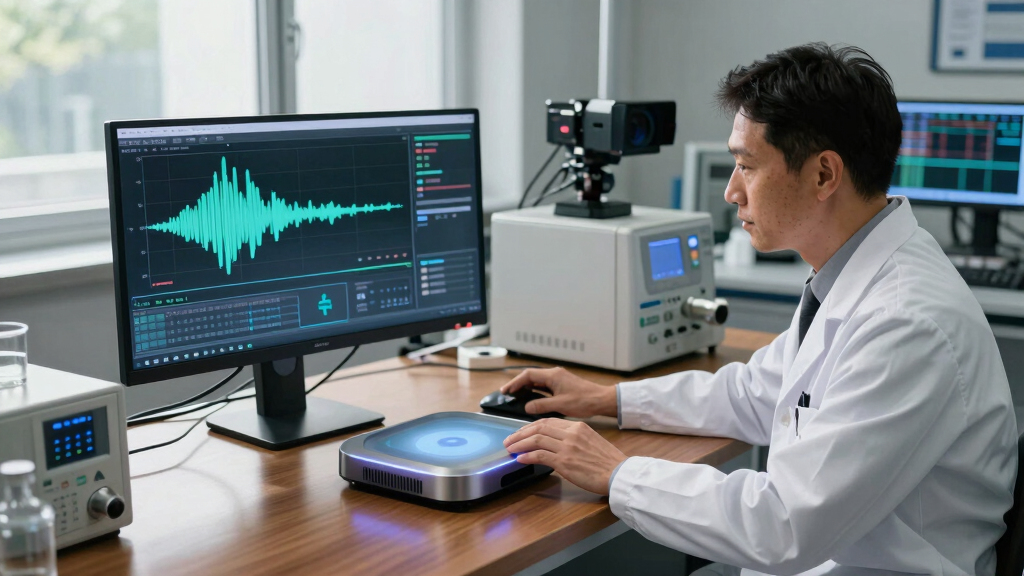
According to the NTSB, the investigation into the UPS Flight 2976 crash in Louisville, Kentucky, included a spectrogram file derived from the cockpit voice recorder. This file, which visually represents sound frequencies, was publicly available in the investigation docket. Tech experts, including YouTuber Scott Manley, noted that it was possible to reconstruct approximate audio from the spectrogram data using AI tools like Codex.
Social media posts indicated that individuals used the spectrogram and publicly available transcripts to generate audio approximations of the cockpit voices, effectively resurrecting the voices of pilots who died in the crash. The NTSB confirmed that these AI-generated voices circulated online, prompting the agency to temporarily restrict access to the investigation docket while it reviews the situation. The agency emphasized that it is prohibited by law from including cockpit audio recordings in its public docket, but the spectrogram data was included in the investigation file.
Why It Matters
This incident underscores the advancing capabilities of AI to recreate human voices with high fidelity, raising concerns about privacy, consent, and the potential misuse of such technology. For aviation safety, it prompts a reassessment of how sensitive data is shared and protected in investigations. The incident also highlights the ethical dilemma of recreating voices of deceased individuals, especially in sensitive contexts like accident investigations, and could influence future policies on data handling and AI use in aviation and beyond.
AI voice reconstruction software
As an affiliate, we earn on qualifying purchases.
As an affiliate, we earn on qualifying purchases.
Background
The NTSB’s investigation into the 2025 UPS crash has been ongoing, with the docket containing various data including voice recordings and transcripts. Federal law restricts the agency from including cockpit audio recordings in the public docket, but in this case, a spectrogram file was accessible. The use of AI to reconstruct voices from spectrograms is a recent development, made possible by advances in machine learning and audio processing. This incident follows broader concerns about AI’s role in recreating human voices, which have been increasingly discussed in tech and legal circles over the past year.
“We are reviewing the circumstances surrounding the AI-generated voices and will take appropriate action to protect privacy and safety.”
— NTSB spokesperson
“It’s technically feasible to reconstruct approximate cockpit voices from spectrogram data using AI tools, which raises significant questions about data security.”
— Scott Manley
spectrogram audio analysis tools
As an affiliate, we earn on qualifying purchases.
As an affiliate, we earn on qualifying purchases.
What Remains Unclear
It is still unclear how widespread the circulation of these AI-generated voices has been, whether any misuse was intentional, and what specific policies the NTSB will implement in response. The legal and ethical boundaries of recreating voices of deceased individuals in such contexts remain under debate, and the full scope of AI’s capabilities in this area is still emerging.
As an affiliate, we earn on qualifying purchases.
What’s Next
The NTSB is expected to complete its review of the incident in the coming weeks, potentially leading to new guidelines on data sharing and AI use in investigations. Further technical assessments may determine whether additional investigation or restrictions are necessary. The incident could also prompt broader discussions within the aviation industry about AI’s role in accident analysis and privacy protections.
audio spectrogram to speech converter
As an affiliate, we earn on qualifying purchases.
As an affiliate, we earn on qualifying purchases.
Key Questions
How was the AI used to recreate the pilots’ voices?
Experts used spectrogram data from the cockpit voice recorder and AI tools like Codex to generate approximate audio of the pilots’ voices, based on the visual frequency data.
Is it legal to recreate voices of deceased pilots using AI?
The legality varies by jurisdiction; in this case, the NTSB is restricted from including cockpit audio recordings in the public docket by law. Ethical considerations are also under discussion.
What are the privacy implications of this development?
This raises concerns about consent and the potential misuse of personal voice data, especially when involving individuals who are no longer alive.
Could this technology be used maliciously in the future?
Yes, AI’s ability to recreate human voices could be exploited for misinformation, fraud, or other malicious purposes, prompting calls for regulation and safeguards.
Source: TechCrunch
Fall Picks
fall essentials
As an affiliate, we earn on qualifying purchases.