
Wearable biosensors can now help you predict illnesses days before symptoms show up by continuously tracking essential signs like heart rate, skin temperature, and metabolic markers. They analyze this data using AI algorithms, detecting subtle changes that indicate potential health issues early. This proactive approach allows you to stay ahead of illness and seek care sooner. If you want to learn how these innovative devices work, there’s more to discover below.
Key Takeaways
- Wearable biosensors analyze vital signs and metabolic markers to detect early physiological changes indicating potential illness days in advance.
- Advanced AI algorithms process continuous data to recognize subtle anomalies predictive of future health issues.
- These devices support proactive health management by providing early alerts for conditions like infections, heart problems, or metabolic imbalances.
- Integration of multiple sensors allows for comprehensive monitoring, enhancing prediction accuracy over time.
- Continuous, real-time data collection enables timely medical intervention before symptoms become apparent.
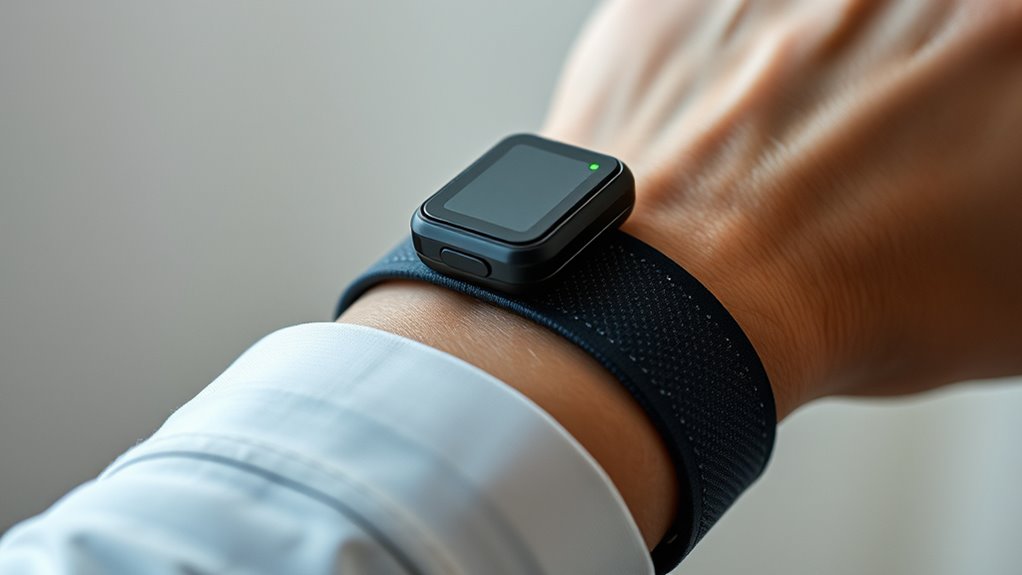
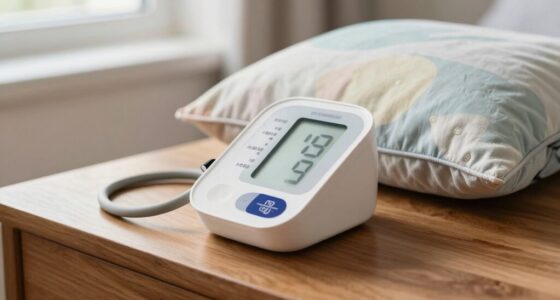
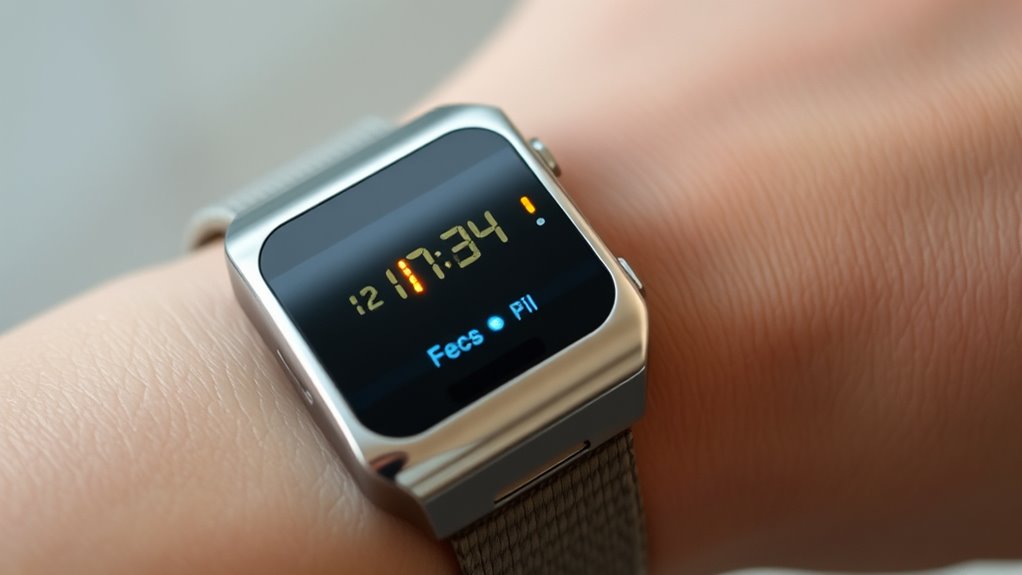
Wearable biosensors are revolutionizing health monitoring by providing continuous, real-time insights into your essential signs and biochemical markers. These devices track vital physiological signals such as heart rate, skin temperature, respiratory parameters, and glucose levels non-invasively. By doing so, they give you a detailed picture of your health status, helping you and your healthcare providers catch potential issues early. For example, continuous glucose monitors help manage diabetes, while sensors measuring heart rate variability can flag increased risks of cardiovascular problems before symptoms appear. This constant data collection enables a proactive approach to health, shifting focus from treating illnesses to preventing them altogether.
One of the most remarkable capabilities of wearable biosensors is their ability to predict illness days in advance. They detect abnormal physiological changes—like subtle shifts in heart rhythm, temperature, or metabolic markers—that often precede the onset of diseases such as infections, inflammation, or insulin resistance. Thanks to advanced AI algorithms, these deviations are analyzed against your individual baseline health metrics to identify early warning signs. This means you get alerts well before you experience symptoms, giving you valuable time to seek medical advice or adjust your lifestyle to mitigate risks. For instance, if your sensors detect irregularities hinting at a possible cardiovascular event, you can take immediate action or consult your doctor, potentially preventing a severe episode. Advanced data analysis further enhances their predictive power by tracking minute fluctuations that might be imperceptible to traditional methods.
AI-powered systems enhance the predictive accuracy of these biosensors by analyzing both real-time and historical data. Machine learning models recognize patterns and anomalies, continuously refining their predictions as they gather more information about your unique health profile. This self-learning capability ensures that alerts are personalized and reliable, reducing false positives that could cause unnecessary concern. When combined with genetic and metabolic data, these predictive analytics become even more precise, offering you a thorough risk assessment tailored specifically to your biology. Wearable biosensors also support chronic disease management by remotely monitoring conditions like diabetes, heart disease, or respiratory illnesses. They enable real-time adjustments to treatment plans, ensuring your care remains responsive and personalized. The integration of wireless communication and advanced materials means these sensors are comfortable and durable, suitable for long-term wear without frequent charging or data loss. Their compact design and multi-parameter capabilities allow you to track physical activity, sleep quality, and nutritional intake, fostering healthier lifestyle choices and promoting overall well-being.

USMECBL Fitness Trackers,Heart Rate Blood Oxygen Sleep Monitor,1.47‘’ OLED Display,Calorie Pedometer Steps Counter Activity watchs,Smart Band 24/7 Health Monitoring(Black)
【25 Sports Modes & Smart Activity Tracking】Track virtually any activity with 25 built-in modes (running, swimming, yoga, etc.)….
As an affiliate, we earn on qualifying purchases.
As an affiliate, we earn on qualifying purchases.
Frequently Asked Questions
How Accurate Are Wearable Biosensors in Predicting Illnesses?
You’re wondering how accurate wearable biosensors are at predicting illnesses. They perform quite well, with controlled studies showing up to 92% accuracy in detecting infections and about 87.5% in real-world COVID-19 detection. While their accuracy can vary depending on device type and algorithms, combining multiple biometric parameters like heart rate and temperature improves predictions. Keep in mind, real-world performance is slightly lower due to population diversity and unknown infection timing.
What Types of Illnesses Can These Biosensors Detect Early?
You’re wondering what illnesses wearable biosensors can detect early. These devices can identify cardiovascular issues like arrhythmias and blood pressure problems before symptoms appear. They also detect metabolic disorders such as diabetes and hormonal imbalances. Respiratory and sleep disorders like sleep apnea and COPD are catchable early, along with infections and inflammation. Future sensors may even predict cancer or autoimmune diseases, giving you a head start on treatment and prevention.
Are Wearable Biosensors Safe for Long-Term Use?
You’re wondering if wearable biosensors are safe for long-term use. They can be, if designed with biocompatible, flexible, and durable materials that reduce tissue reactions and withstand environmental changes. Ensuring reliable power sources and rigorous safety testing is vital. When properly developed, they minimize risks like skin irritation or tissue damage. However, ongoing evaluation of material safety, device reliability, and privacy concerns is essential for their safe, long-term application.
How Do Wearable Biosensors Protect User Privacy?
Imagine your private health data is a fragile, shimmering crystal. Wearable biosensors protect it with high-tech safeguards like end-to-end encryption, making sure it’s locked tight during transmission. Biometric and multi-factor authentication act like gatekeepers, while regular security updates patch any vulnerabilities. Data is anonymized to hide your identity, and clear consent processes guarantee you’re aware. These measures work together to keep your sensitive information safe from prying eyes.
What Is the Cost of Implementing These Biosensor Technologies?
You’re wondering about the costs to implement wearable biosensor technologies. While exact device prices vary, market growth indicates they’re becoming more affordable. Initial setup includes device purchase, integration into healthcare systems, staff training, and ongoing maintenance. These costs are offset by potential savings from preventing complications and reducing hospital stays. As technology advances, expect costs to decrease further, making widespread adoption more feasible and cost-effective in the long run.

DEXCOM G7 SENSOR 10 DAY DEV
As an affiliate, we earn on qualifying purchases.
As an affiliate, we earn on qualifying purchases.
Conclusion
By using wearable biosensors that predict illness days in advance, you can stay ahead of health issues and make proactive choices. These devices have shown to detect early warning signs up to three days before symptoms appear, giving you valuable time to seek treatment. With such technology, you’re not just reacting to illness—you’re preventing it. Embracing these innovations could lead to a 20% reduction in hospital visits, transforming how we manage health daily.
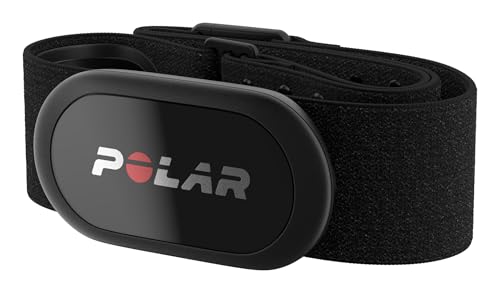
Polar H10 Heart Rate Monitor Chest Strap – ANT + Bluetooth, Waterproof HR Sensor for Men and Women, Black, M-XXL
WORKS WITH EVERYTHING: Polar HRM works with ALL HRM compatible Equipment.
As an affiliate, we earn on qualifying purchases.
As an affiliate, we earn on qualifying purchases.
early illness detection wearable
As an affiliate, we earn on qualifying purchases.
As an affiliate, we earn on qualifying purchases.