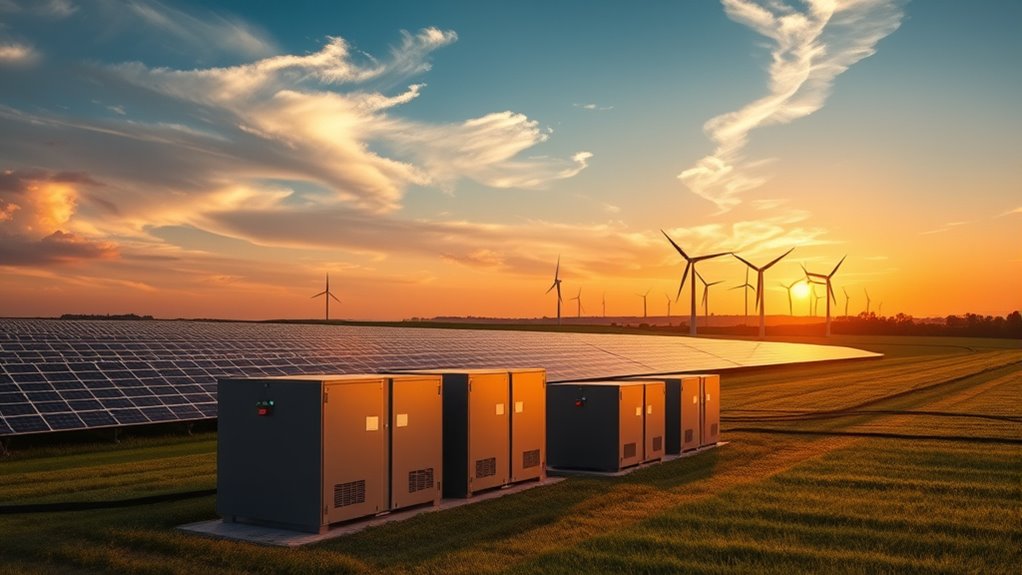
Long-duration energy storage (LDES) makes renewable energy like solar and wind more reliable by storing extra energy for days or weeks. This helps balance supply and demand, ensuring you have power even when the sun isn’t shining or the wind isn’t blowing. With innovations in storage technology, LDES enhances grid stability and reduces greenhouse gas emissions. If you want to explore how these advancements shape a sustainable energy future, there’s more to discover ahead.
Key Takeaways
- Long-Duration Energy Storage (LDES) enables energy storage for days or weeks, enhancing the reliability of renewable energy sources like solar and wind.
- LDES balances supply and demand by storing excess energy and releasing it when needed, ensuring a consistent energy supply.
- Advanced technologies in LDES, such as pumped hydro and thermal storage, improve energy retention and efficiency, supporting renewable integration.
- LDES contributes to grid stability and resilience, reducing dependence on fossil fuels and promoting greenhouse gas emissions reduction.
- The future of LDES is promising, with expected advancements making it more efficient and affordable, facilitating a sustainable energy landscape.
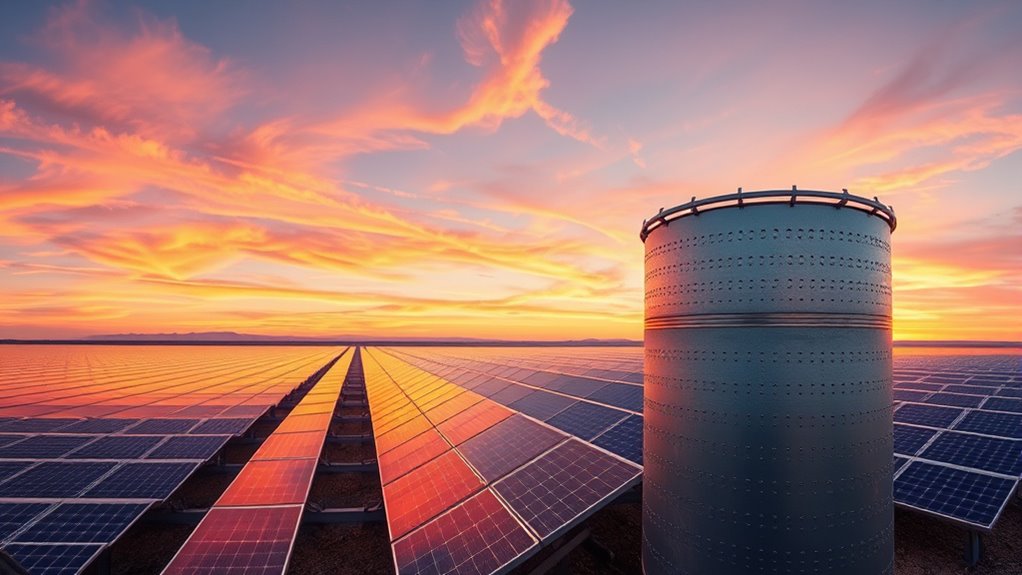
Have you ever wondered how we can store energy for days or even weeks? The answer lies in long-duration energy storage (LDES), a game-changing solution that addresses the challenges of renewable energy. With the rapid growth of solar and wind power, the need for effective energy storage has never been more vital. You might think of traditional batteries, but LDES goes beyond that, allowing us to tap into renewable sources while ensuring a continuous and reliable energy supply.
Imagine a world where your home can harness the sun’s energy during the day and store it for use during cloudy days or at night. That’s the promise of LDES. These systems can hold energy for extended periods, often from hours to several weeks, making them essential for grid integration. They help balance supply and demand by storing excess energy generated during peak production times and releasing it when demand increases, ensuring stability in our energy systems.
Imagine harnessing solar energy during the day and using it nights or cloudy days—long-duration energy storage makes this a reality.
Technology innovation plays a vital role in the development of LDES solutions. Researchers and engineers are continually pushing the boundaries of what’s possible. From advanced pumped hydro storage to innovative thermal storage systems, these technologies are designed to optimize energy retention and efficiency. You might be surprised to learn about gravity-based energy storage, where excess energy is used to lift heavy weights, storing potential energy that can be released when needed. This approach, along with other emerging technologies, is revolutionizing how we think about energy storage. Additionally, AI security solutions can enhance the protection of systems that manage LDES by ensuring data integrity and safeguarding against cyber threats.
The integration of LDES into our energy grid not only enhances reliability but also accelerates the transition to a sustainable future. By seamlessly incorporating these systems, we can reduce our dependency on fossil fuels and lower greenhouse gas emissions. As you embrace this shift, you’ll find that LDES provides a versatile solution that complements various renewable sources, making them more viable and dependable.
As technology continues to advance, you can expect long-duration energy storage to become increasingly efficient and affordable. It’s an exciting time in the energy sector, and your participation in this evolution can help shape a cleaner, more sustainable future. By supporting the adoption of LDES, you’re contributing to a resilient energy grid that can withstand fluctuations and provide reliable power to homes and businesses alike. The future of renewable energy is bright, and long-duration energy storage is set to play a pivotal role in making it a reality.
Frequently Asked Questions
What Are the Main Technologies Used for Long-Duration Energy Storage?
The main technologies used for long-duration energy storage include battery innovations and pumped hydro. With battery innovations, you can store energy for extended periods, utilizing various chemistries to improve efficiency and capacity. Pumped hydro, on the other hand, leverages water reservoirs; when energy is abundant, water’s pumped uphill, and when you need it, it’s released to generate electricity. Both technologies play crucial roles in enhancing energy reliability and sustainability.
How Does Long-Duration Storage Impact Energy Prices?
Long-duration storage acts like a safety net in the energy market, catching price spikes and smoothing out fluctuations. When demand surges, you’ve got a reliable backup, enhancing market flexibility. This stability helps keep energy prices in check, preventing the wild rollercoaster of costs that can scare consumers. With a steadier supply, you can breathe easier knowing prices won’t swing unpredictably, making energy more affordable for everyone in the long run.
Are There Any Environmental Concerns With Long-Duration Energy Storage?
Yes, there are environmental concerns with long-duration energy storage. While it can enhance resource sustainability, the materials used for storage systems can have significant environmental impacts. Mining for raw materials, like lithium and cobalt, can lead to habitat destruction and pollution. Additionally, the energy used in production and the end-of-life disposal of these systems must be managed carefully to minimize their overall footprint. Balancing energy needs with environmental protection is vital.
How Scalable Is Long-Duration Energy Storage for Larger Grids?
Long-duration energy storage is highly scalable for larger grids. You can optimize costs by integrating these systems into existing infrastructures, enhancing grid stability and reliability. As demand for renewable energy grows, scaling these technologies becomes essential. You’ll find that successful grid integration can lead to more efficient energy management, reducing peak load pressures and improving overall system performance. It’s a smart investment for future-proofing energy demands on a larger scale.
What Role Does Government Policy Play in Long-Duration Energy Storage Development?
Did you know that government policy can influence up to 70% of energy storage investments? You’ll find that effective policy incentives and regulatory frameworks are essential for long-duration energy storage development. They encourage innovation and attract private investment, making it easier for companies to scale their operations. By providing clear guidelines and financial support, governments help create a stable environment where advanced storage solutions can thrive, ultimately enhancing energy reliability and sustainability.
Conclusion
Long-duration energy storage is vital for making renewable energy reliable. Did you know that by 2040, experts estimate that energy storage capacity could reach over 1,000 gigawatts globally? That’s enough to power millions of homes! By investing in advanced storage solutions, you can help guarantee a sustainable energy future. Embracing this technology means you’re not just adapting to change—you’re driving it. Together, we can transform the way we harness and use renewable energy for a greener tomorrow.