
Exploring synesthetic art means you’re stepping into a world where senses merge through technology. This innovative approach blends colors with sounds and emotions, creating immersive experiences that engage you fully. Artists use their unique perceptions to craft pieces that resonate on multiple sensory levels. With interactive installations, you become an active participant, deepening your connection to art. Discover the insights and transformative experiences this fascinating blend of senses can offer as you continue your journey.

Prime made for students and young adults
- Fast, free delivery for dorm and study essentials
- Prime Video and Amazon Music included
- Member-only deals
Key Takeaways
- Synesthetic art merges multiple senses, creating immersive experiences that challenge traditional perceptions of art.
- Artists utilize personal sensory associations, linking colors with sounds, tastes, or scents to enhance emotional connections.
- Technology enables interactive installations, allowing viewers to engage actively and experience dynamic sensory fusions.
- This art form promotes awareness of the interconnectedness of sensory experiences, enriching our understanding of perception.
- Synesthetic art transcends visual boundaries, fostering a dialogue between technology and sensory perception for a unique artistic experience.
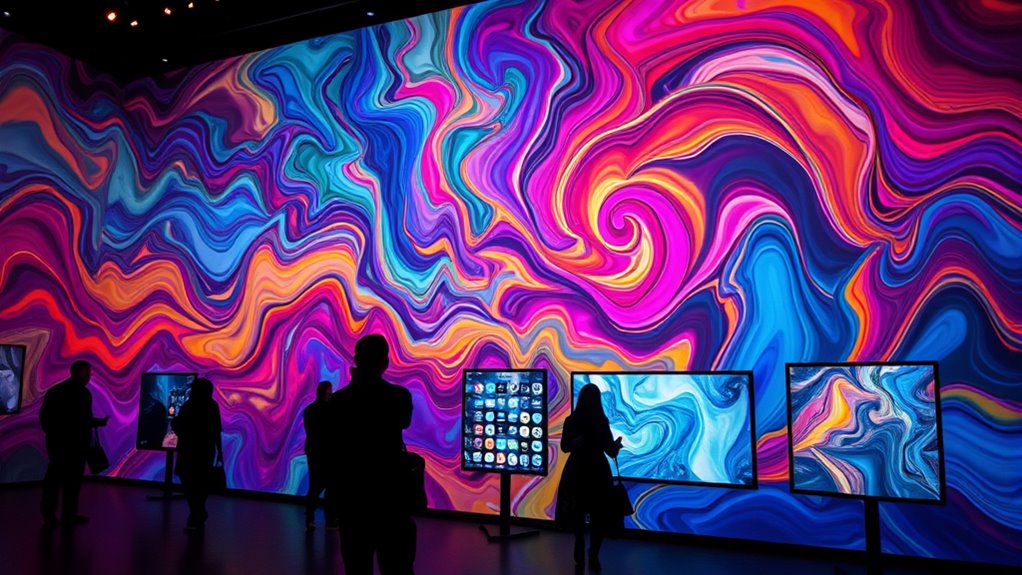
As you explore the world of synesthetic art, you’ll discover a fascinating blend of senses that challenges traditional boundaries. This unique form of expression taps into color perception and sensory integration, allowing you to experience art in a way that transcends the conventional. Imagine stepping into a gallery where colors not only dance across the canvas but also resonate with sounds and evoke emotions. This is the essence of synesthetic art—an immersive experience that invites you to engage all your senses simultaneously.
Discover the captivating world of synesthetic art, where colors resonate with sounds, inviting a multi-sensory experience like no other.
When you look at a piece of synesthetic art, you might feel a warmth in your chest as vibrant colors evoke a familiar melody. This phenomenon occurs because artists often draw upon their own synesthetic experiences, where they associate colors with specific sounds, tastes, or even scents. Your brain may process these stimuli in an integrated way, creating a rich tapestry of sensory experiences that heighten your appreciation for the artwork. You might find that when you see a deep blue, it reminds you of the soothing sound of ocean waves, or how a bright yellow evokes the cheerful notes of a flute.
Technology plays a pivotal role in enhancing synesthetic art today. Innovative tools enable artists to fuse various sensory elements, crafting experiences that go beyond traditional viewing. As an audience member, you might interact with installations that respond to your movements, allowing you to change the colors and sounds in real-time. This interactive aspect deepens your engagement, making you an active participant rather than a passive observer. You’ll find that technology doesn’t just replicate the synesthetic experience but amplifies it, creating a dynamic dialogue between you and the artwork. Additionally, the use of color accuracy in digital displays ensures that the vibrant hues of synesthetic art are portrayed authentically, enriching your sensory journey.
Moreover, synesthetic art challenges your understanding of perception itself. It asks you to reconsider how you experience the world and the connections between your senses. You may start to see everyday objects and experiences in a new light, recognizing the beauty in the interplay of your own sensory perceptions. By immersing yourself in this art form, you’ll cultivate a greater appreciation for the complexity of human perception and the myriad ways it can be expressed.
interactive digital art installation
As an affiliate, we earn on qualifying purchases.
As an affiliate, we earn on qualifying purchases.
Frequently Asked Questions
What Is Synesthesia, and How Does It Relate to Art?
Synesthesia is a fascinating condition where your senses overlap, leading to a neural crossover that allows you to experience one sense through another. For instance, you might see colors when you hear music. In art, this sensory integration can create unique experiences, as artists use their synesthetic perceptions to blend visuals and sounds, crafting works that resonate on multiple levels. This interplay invites viewers to explore and feel art in innovative ways, enhancing emotional connections.
How Can Technology Enhance Synesthetic Experiences?
Technology can enhance synesthetic experiences like a painter adding vibrant colors to a dull canvas. By using neural interfaces, you can tap directly into sensory pathways, creating immersive environments that blend sound, sight, and touch. These advancements promote multisensory integration, allowing you to experience art in a profoundly personal way. Imagine feeling music as visual patterns or tasting colors, transforming how you engage with creativity and perception. It’s an exciting frontier for artists and audiences alike!
Are There Specific Tools for Creating Synesthetic Art?
Yes, there are specific tools for creating synesthetic art. You can use multisensory interfaces like software that combines sound, color, and touch to generate immersive installations. Tools such as virtual reality headsets and projection mapping allow you to craft environments that engage multiple senses simultaneously. By integrating these technologies, you’ll enhance your artwork’s impact, inviting viewers to experience a unique blend of sensations that evoke emotional responses and deeper connections.
Can Anyone Experience Synesthesia Through Art?
Yes, anyone can experience synesthesia through art! When you engage with multisensory perception, you might find unexpected creative crossovers that spark your imagination. As you explore colors and sounds in a piece, you could feel the sensation of tasting or smelling them. It’s like a delightful coincidence that enhances your experience. By immersing yourself in different artistic expressions, you open the door to a broader sensory world, making art truly magical.
What Are Some Famous Examples of Synesthetic Artists?
Famous artists like Wassily Kandinsky and Olivier Messiaen are known for their multisensory masterpieces. Kandinsky often linked colors to music, creating paintings that resonate with sound, while Messiaen composed music that evokes vivid visual imagery. You can also look at artists like Paul Klee, whose work reflects a blend of colors and emotions, emphasizing the interplay of senses. These creators invite you to experience art in a uniquely profound way.
As an affiliate, we earn on qualifying purchases.
Conclusion
In exploring synesthetic art, you discover a world where colors sing, sounds dance, and emotions paint vivid landscapes. By merging senses through technology, you reveal creativity that transcends traditional boundaries, inviting you to experience art in a whole new way. Embrace the harmony, celebrate the innovation, and immerse yourself in the beauty of interconnected sensations. As you delve deeper, you’ll find that every note, every hue, and every feeling coalesce into a rich tapestry of expression.
multi-sensory art experience equipment
As an affiliate, we earn on qualifying purchases.
As an affiliate, we earn on qualifying purchases.
As an affiliate, we earn on qualifying purchases.
Halloween Picks
halloween
As an affiliate, we earn on qualifying purchases.