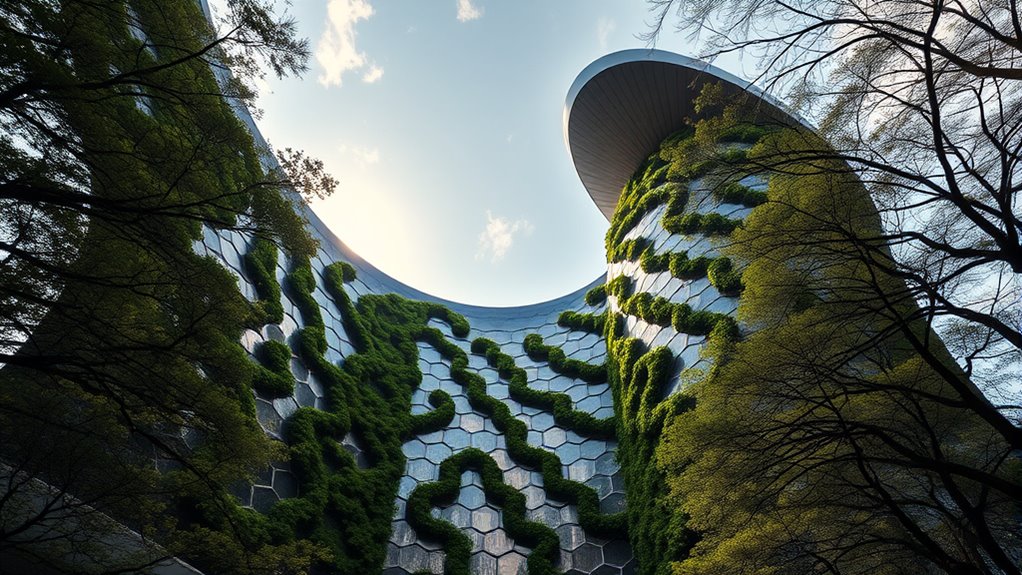

Biomimicry in architecture lets you tap into nature’s innovations to create sustainable, efficient buildings. You can draw inspiration from natural structures, like termite mounds, to develop adaptive ventilation systems that enhance comfort and reduce energy use. By choosing renewable materials, you’re minimizing environmental impact and promoting harmony with nature. This approach not only leads to beautiful designs but also cultivates a balanced relationship with your surroundings. Discover how these principles can transform your architectural vision.
Key Takeaways
- Biomimicry in architecture utilizes natural systems to inspire innovative design solutions that enhance building efficiency and comfort.
- Structures like termite mounds exemplify natural ventilation, helping to regulate temperature and reduce energy consumption in buildings.
- Sustainable materials, such as bamboo and fungi-derived products, align with nature and lower the environmental impact of architectural projects.
- Principles of resilience and efficiency from nature guide architects in creating adaptive structures that harmonize with their environment.
- Embracing biomimicry fosters environmentally conscious design practices, promoting sustainability for future generations within the built environment.
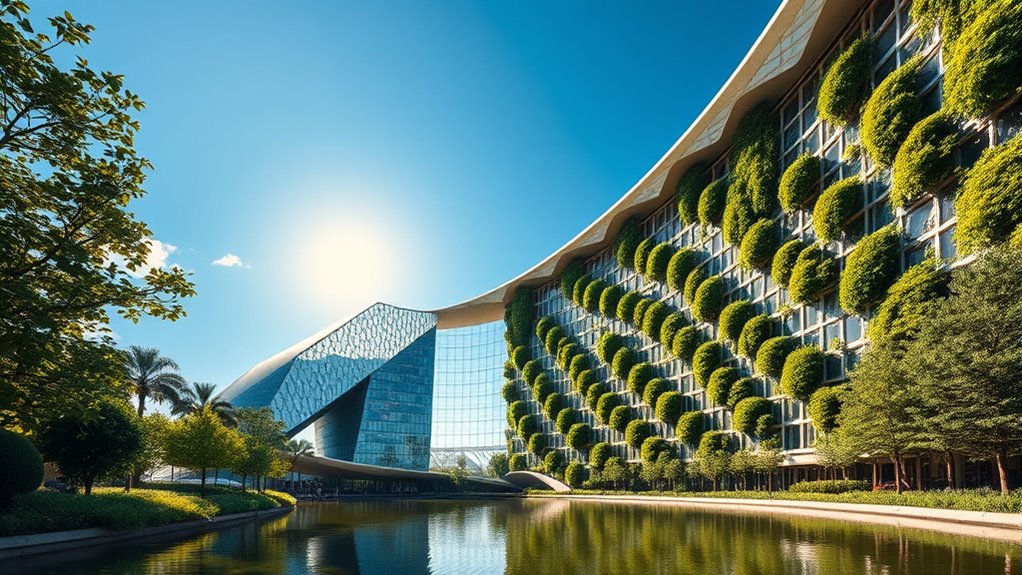
Have you ever wondered how nature inspires innovative designs in architecture? You’re not alone. Architects and designers frequently turn to the natural world for inspiration, using concepts from biomimicry to create buildings that are not only visually stunning but also highly functional. By observing how nature solves problems, you can see how it leads to the development of adaptive structures and the use of sustainable materials that align with environmental needs.
When you think about it, nature has perfected the art of design over millions of years. For instance, structures like termite mounds are a great example of natural ventilation systems. By mimicking these designs, architects can create buildings that regulate temperature without relying solely on mechanical systems, drastically reducing energy consumption. This approach not only enhances comfort but also promotes sustainability. You, as a future architect or designer, can take a cue from nature by integrating these adaptive structures into your designs, achieving efficiency while respecting the environment.
Sustainable materials are another critical aspect of biomimicry in architecture. Imagine using materials that are biodegradable or sourced from renewable resources. By studying natural processes, you can identify materials that not only reduce environmental impact but also enhance the aesthetic appeal of your projects. For example, you might consider using materials derived from fungi or bamboo, both of which are strong yet sustainable. These choices can lead to buildings that not only look good but also reduce the carbon footprint, aligning with modern sustainability goals.
As you dive deeper into this field, you’ll realize that the principles of biomimicry aren’t just about imitation. They’re about understanding the underlying themes of resilience and efficiency found in nature. Each time you incorporate an adaptive structure or sustainable material into your designs, you’re not just creating a building; you’re crafting a harmonious relationship between human habitats and the natural environment. Music therapy principles can also enhance the creative process in architecture, helping designers to think more innovatively.
Incorporating these ideas into your work enables you to lead the charge toward a more sustainable future. As you embrace biomimicry, you’ll find that your designs can inspire others to think differently about architecture. You’re not just designing buildings; you’re creating spaces that resonate with the natural world, fostering a sense of community while protecting the planet for future generations. So, why not let nature guide you on your architectural journey?

An Introduction to Natural Ventilation for Buildings (Air Conditioning Systems Engineering)
As an affiliate, we earn on qualifying purchases.
As an affiliate, we earn on qualifying purchases.
Frequently Asked Questions
How Can I Apply Biomimicry in My Home Design?
You can apply biomimicry in your home design by focusing on interior design elements that mimic natural forms and functions. Incorporate materials that reflect the textures and colors found in nature, like wood and stone. For landscape integration, design your outdoor spaces to blend seamlessly with the environment, using native plants and water features. Consider passive heating and cooling techniques inspired by natural systems to enhance energy efficiency and comfort in your home.
What Materials Are Commonly Used in Biomimetic Architecture?
In biomimetic architecture, you’ll often find materials like natural fibers and bio-based composites prominently used. These materials mimic the efficiency and sustainability found in nature, offering strength and flexibility. For instance, hemp and bamboo provide excellent structural support while being eco-friendly. By incorporating these innovative materials, you’re not just enhancing your design’s aesthetic appeal; you’re also championing environmental sustainability, creating spaces that harmonize with nature while benefiting from its proven solutions.
Are There Certifications for Biomimetic Buildings?
Yes, there are certifications for biomimetic buildings. You can look into certification standards like LEED or BREEAM, which assess sustainability and eco-friendliness. Additionally, eco label programs recognize buildings that incorporate nature-inspired designs and materials effectively. These certifications not only enhance the building’s credibility but also demonstrate your commitment to environmental stewardship. By pursuing such certifications, you can contribute to a more sustainable future while gaining recognition for innovative design practices.
How Does Biomimicry Influence Energy Efficiency in Architecture?
When it comes to energy efficiency, biomimicry really hits the nail on the head. You’ll find that it enhances thermal regulation and natural ventilation in buildings. By mimicking nature’s strategies, like how termite mounds maintain temperature or how certain trees direct airflow, architects create spaces that stay comfortable without relying heavily on artificial systems. This not only cuts energy costs but also promotes sustainability, making your building more eco-friendly and enjoyable to live in.
Can Biomimicry Be Applied to Urban Planning as Well?
Absolutely, you can apply biomimicry to urban planning! By studying natural systems, you can design urban ecosystems that enhance city resilience. For instance, observing how forests manage water can inspire efficient stormwater systems. You’ll find that mimicking the way nature organizes communities fosters biodiversity and improves air quality. Implementing these principles not only creates sustainable cities but also enhances the well-being of their inhabitants. So, it’s a smart approach for modern urban development!

Building with Bamboo: Design and Technology of a Sustainable Architecture Third and revised edition
As an affiliate, we earn on qualifying purchases.
As an affiliate, we earn on qualifying purchases.
Conclusion
Incorporating biomimicry in architecture not only leads to innovative designs but also promotes sustainability. Did you know that buildings inspired by nature can reduce energy consumption by up to 30%? By mimicking natural processes and forms, you’re not just creating aesthetically pleasing structures; you’re contributing to a healthier planet. Embracing this approach means you’re helping to create a future where architecture and nature coexist harmoniously, proving that sometimes, the best solutions are found right under our noses.
Concrete Prepared with Bio Deposited Aggregates
As an affiliate, we earn on qualifying purchases.
As an affiliate, we earn on qualifying purchases.

As an affiliate, we earn on qualifying purchases.