
Self-healing materials that repair overnight are designed to fix damage quietly and efficiently while you sleep. These advanced materials use mechanisms like microcapsules releasing healing agents, reversible bonds, or enzymatic reactions to seal cracks and restore strength automatically. Many coatings, polymers, and composites now heal in just a few hours, making products more durable and reliable. If you’re curious about how these smart systems work and their latest developments, you’ll find plenty of fascinating insights ahead.
Key Takeaways
- Advances in thermoplastic healing agents enable materials to repair overnight through heat activation.
- Microcapsule-based systems release healing agents quickly, allowing for rapid self-repair within a night.
- Reversible bonds in polymers facilitate spontaneous rejoining of cracks over a short period, often overnight.
- Enzymatic or chemical reactions, such as calcium carbonate formation, can seal damages in a few hours.
- Recent innovations aim to accelerate self-healing speed, ensuring repairs occur effectively overnight.

Self-healing materials are innovative substances designed to repair themselves after damage, extending the lifespan and reliability of various products. When you use or encounter these materials, you’re tapping into a technology that actively restores its integrity without external intervention. Many types of self-healing materials exist, including polymers, ceramics, metals, composites, and hydrogels. Polymers are among the most common, known for their ability to autonomously recover after damage. They often contain embedded microcapsules filled with healing agents that release upon cracking, filling and solidifying to restore strength. Hydrogels, with their 3D polymer network and high water content, can self-heal through dynamic interactions like reversible bonds, making them ideal for biomedical applications such as tissue regeneration or drug delivery. Creativity plays a role in designing new self-healing mechanisms and materials, fostering innovation in this field. You might also see self-healing in organic dyes doped into polymer matrices like PMMA, which can repair photodegradation when exposed to light, extending their functional lifespan. Special alloys like sulfur-selenium demonstrate self-healing through thermal reconnection within minutes, useful for electronics and protective coatings. The mechanisms behind self-healing are diverse. Some materials release healing agents via microcapsules when damaged, while others utilize enzymatic reactions—like carbonic anhydrase enzymes in concrete—that react with CO₂ to form sealing calcium carbonate crystals, effectively plugging cracks. Thermoplastic healing agents in polymers can be repeatedly activated through heat, allowing for multiple repairs without the need for additional chemicals or monitoring. On a molecular level, reversible chemical bonds such as disulfide or hydrogen bonds enable materials to reconnect after damage, facilitating spontaneous healing. Your applications of these materials are broad and impactful. Flexible sulfur-selenium alloys can be used in bendable electronics like foldable smartphones or steel coatings that self-repair scratches. Concrete structures can incorporate self-healing properties by converting CO₂ into calcium carbonate, reducing maintenance costs. Carbon-fiber reinforced composites with heat-activated healing allow for the repair of critical aerospace or automotive components, increasing their durability and lifespan. Protective polymer coatings on metals not only repair minor damages but also repel dirt and water, maintaining surface integrity. Injectable hydrogels serve in biomedical engineering, aiding tissue regeneration and enabling advanced 3D bioprinting. Recent advancements have improved the efficiency of self-healing polymers. Methyl acrylate copolymers enhance healing in phase change materials, while polyurethanes heal quickly and regain strength, minimizing downtime. Encapsulation techniques have been developed for coatings, with fiber layers acting as therapeutic capsules. Despite progress, challenges remain, such as delayed healing that can cause side reactions hindering repeated recovery. Researchers are focused on speeding up healing processes to improve durability, prevent corrosion, and ensure long-term reliability. Overall, self-healing materials are revolutionizing how we design and maintain products, promising a future where damage is repaired overnight with minimal effort.

Polymer Coatings: Technologies and Applications: Technologies and Applications
As an affiliate, we earn on qualifying purchases.
As an affiliate, we earn on qualifying purchases.
Frequently Asked Questions
Are Self-Healing Materials Cost-Effective for Commercial Use?
You’re wondering if self-healing materials are cost-effective for commercial use. While their high initial costs and complex production pose challenges, they offer long-term savings by reducing maintenance, repairs, and replacements. With ongoing innovations like nanotechnology and scalable manufacturing, costs are expected to decrease. If you consider extended durability and safety benefits, these materials can become a financially smart choice for industries seeking sustainable, low-maintenance solutions.
How Long Do Self-Healing Properties Last in Real-World Conditions?
You might think self-healing properties last forever, but reality’s a bit more demanding. In real-world conditions, these materials often lose effectiveness after repeated damage or environmental stress, especially as healing agents deplete or degrade. While some systems can repair multiple times, most won’t last decades without maintenance. So, don’t count on perennial self-repair—your materials need care, replenishment, and consideration of harsh conditions to stay resilient over time.
Can Self-Healing Materials Be Recycled or Reused?
You might wonder if self-healing materials can be recycled or reused. The good news is that many are designed for recyclability, like vitrimer-based electronics and conductive polymers, which heal and reshape without losing performance. They often use reversible bonds, making it possible to recover materials at the end of their life. This way, you can extend product lifespan, reduce waste, and support sustainable practices in electronics and composite applications.
Do Self-Healing Materials Work in Extreme Temperatures?
You might wonder if self-healing materials work in extreme temperatures. The good news is, many are designed for high temperatures—some can cure at 100°C to 200°C and still heal effectively, even after exposure to 177°C. Others perform well at low temperatures, like -30°C, maintaining their ability to repair. However, extreme conditions can slow healing, so choosing the right material depends on your specific thermal environment.
Are There Health or Environmental Risks Associated With These Materials?
You might wonder if these materials pose health or environmental risks. They can contain chemicals or enzymes that neutralize toxins, which helps reduce exposure. However, concerns remain about potential toxicity from degradation products, stability issues, and environmental impacts from their production and disposal. While they offer benefits like longer-lasting products, you should watch for unstandardized safety assessments and regulatory gaps that could affect their long-term safety for people and the planet.
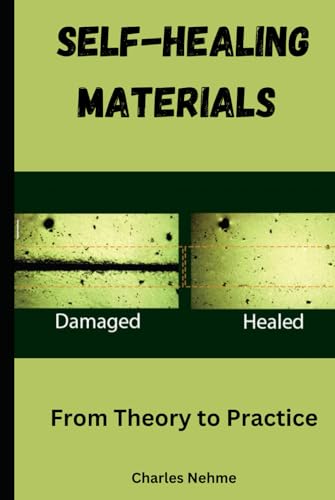
Self-Healing Materials: From Theory to Practice
As an affiliate, we earn on qualifying purchases.
As an affiliate, we earn on qualifying purchases.
Conclusion
Imagine a future where your materials mend themselves overnight, like silent guardians watching over your belongings. These self-healing wonders transform everyday wear and tear into distant memories, turning broken into unbroken. It’s as if the very fabric of our world whispers, “Repair me,” weaving resilience into the fabric of our lives. With such innovations, the promise isn’t just repair—it’s a silent symphony of durability and hope, playing quietly in the background of tomorrow.
self-healing hydrogels for biomedical use
As an affiliate, we earn on qualifying purchases.
As an affiliate, we earn on qualifying purchases.

XPEL Clear Paint Protection Film Roll 6" x 60" – Self-Healing, Non-Yellowing Polyurethane PPF Wrap Protects Paint from Chips, Scratches & Road Debris | Invisible Shield for Cars, Trucks & More
USAGE – XPEL Clear Paint Protection Film helps shield your vehicle’s finish from chips, scratches, and environmental wear….
As an affiliate, we earn on qualifying purchases.
As an affiliate, we earn on qualifying purchases.